2026 may simply be the yr Apple will promote its first folding iPhone — however stories counsel the fee might be round $2,400, which might make it the most costly folding telephone available on the market.
Apple’s were given a couple of different new merchandise anticipated to land in 2026, too, they usually would possibly not simply make headlines for prime costs. There’s communicate of a lower-cost MacBook within the works, in addition to a number of merchandise for the good house, together with a Home Hub.
In this week’s episode of One More Thing, which you’ll watch embedded above, I wreck down what might be Apple’s 3 greatest new merchandise anticipated to release in 2026, past the standard upgrades.
And with Apple celebrating its fiftieth anniversary in 2026, do not be expecting this to be an ordinary yr.
For extra One More Thing, subscribe to our YouTube web page to catch Bridget Carey breaking down the most recent Apple information and problems each and every Friday.
Groundbreaking applied sciences are remodeling on a regular basis existence, and this 12 months was once no exception. In 2025, we witnessed a number of new units that driven the margins of technological innovation. These come with a bunch of foldable smartphones, good wearables and extra. Many leading edge units that had been only a thought become to be had commercially this 12 months. As we’re heading into a brand new 12 months, we have now rounded up one of the most maximum distinct units of 2025 that stand out for his or her design, capability, and innovation.
The listing contains Samsung’s long-awaited triple-folding smartphone, the Galaxy Z TriFold; Apple’s iPhone Air; Ray-Ban Meta Gen 2 Glasses; Lenovo’s ThinkBook Plus Gen 6 Rollable; and Halliday Smart Glasses.
Samsung Galaxy Z TriFold
Samsung’s long-awaited triple folding smartphone, the Samsung Galaxy Z TriFold, went professional this 12 months. The new smartphone marked Samsung’s foray into the multi-folding handset marketplace. The TriFold is without doubt one of the first commercially to be had triple-screen foldable telephones within the global marketplace and pushes the bounds of cellular shape elements. It options an inward-folding design and has a 10-inch QXGA+ Dynamic AMOLED 2X primary show with as much as 1,600 nits of height brightness and as much as 120Hz adaptive refresh fee.
The Galaxy Z TriFold includes a 6.5-inch full-HD+ Dynamic AMOLED 2X duvet show with 2,600nits of height brightness, as much as 120Hz adaptive refresh fee. It has an octa-core 3nm Snapdragon 8 Elite for Galaxy chipset underneath the hood, coupled with 16GB of RAM and as much as 1TB of onboard garage. The handset is preloaded with Android 16-based OneUI 8.
For optics, the Galaxy Z TriFold has a triple rear digicam unit led via a 200-megapixel number one digicam. The digicam setup additionally features a 12-megapixel ultrawide digicam and a 10-megapixel telephoto digicam with as much as 30x virtual zoom. The telephone has a 10-megapixel selfie digicam on each the duvet display and primary display. The telephone has a 5,600mAh battery with 45W stressed out and 15W wi-fi rapid charging enhance.
Samsung Galaxy Z TriFold Price
The Galaxy Z TriFold is priced at KRW 3,59,400 million (kind of Rs. 2.2 lakh) in South Korea. It will quickly be to be had in the United States beginning Q1 subsequent 12 months.
iPhone Air
The iPhone Air was once launched in September 2025 as Apple’s thinnest ever smartphone thus far. The new tool set traits via combining Apple’s design language with new engineering, and challenged different smartphone producers to shift their designs. The iPhone Air measures simply 5.6mm in thickness.
The telephone includes a 6.5-inch Super Retina XDR OLED show with ProMovement enhance. The show helps as much as 120Hz refresh fee and reaches as much as 3,000 nits. It runs on an Apple A19 Pro chipset and helps Apple Intelligence options.
The iPhone Air options Apple’s N1 chip. It makes use of a C1X modem. On the rear, it has a 48-megapixel digicam with an f/1.6 aperture. On the entrance, the tool boasts an 18-megapixel sensor for selfies and video chats. The telephone has a three,149mAh battery and is alleged to ship as much as 27 hours of video playback on a unmarried fee.
iPhone Air Price in India
The worth of iPhone Air begins at Rs. 1,19,900 for the bottom style with 256GB garage in India. The 512GB and 1TB garage variations are priced at Rs. 1,39,900 and Rs. 1,59,900, respectively. The telephone is to be had in Sky Blue, Light Gold, Cloud White, and Space Black color choices.
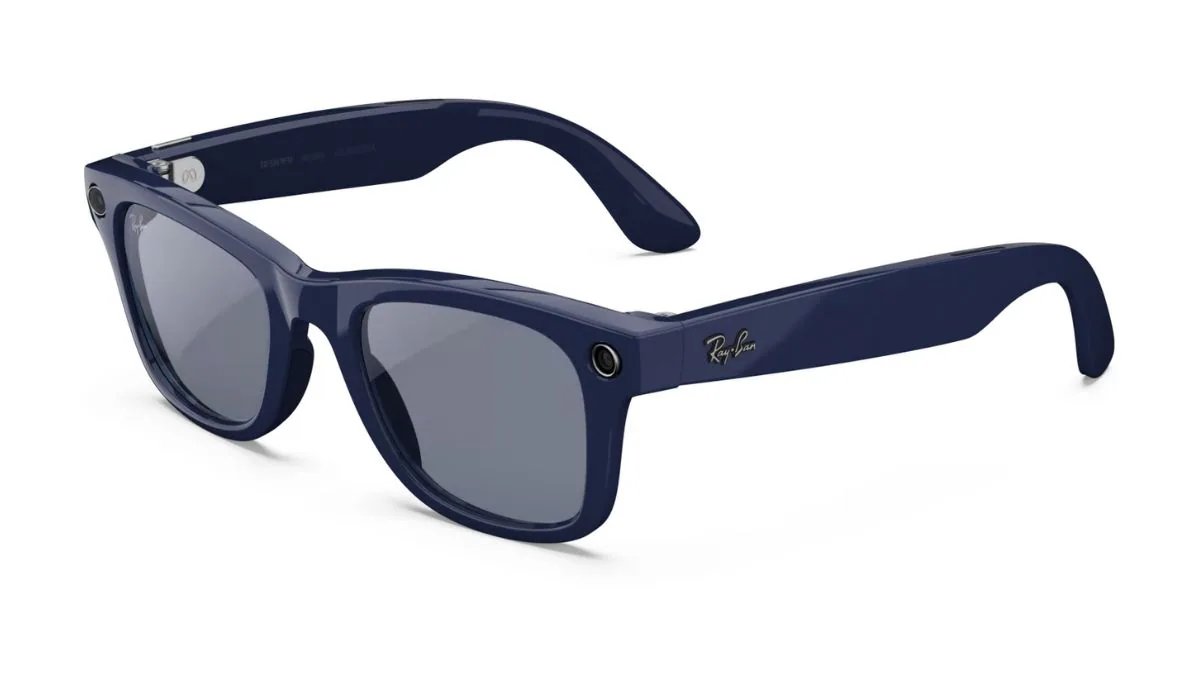
The Ray-Ban Meta Gen 2 Glasses are co-developed via Meta and EssilorLuxottica. This style keeps the design of conventional Ray-Ban glasses whilst integrating complicated options. The good glasses permit customers to take pictures and movies hands-free and get admission to the Meta AI voice assistant. The tool has open-ear audio system for audio.
Available in a couple of body kinds like Wayfarer and Headliner with other finishes, the Ray-Ban Meta Gen 2 Glasses characteristic a 12-megapixel ultra-wide digicam in a position to shooting 1080p movies as much as 60 seconds. They have a five-microphone device. Users may also move at once to Instagram and Facebook with the good glasses.
The Ray-Ban Meta Gen 2 Glasses enhance Bluetooth 5.3. They fit with each iOS and Android during the Meta View app. The glasses include as much as 32GB of interior garage. The glasses are claimed to ship as much as 8 hours of utilization on a unmarried fee. The case of the glasses is claimed to supply an extra 48 hours value of charging.
Ray-Ban Meta Gen 2 Glasses Price in India
The Ray-Ban Meta Gen 2 Glasses worth in India begins at Rs. 39,900. They are to be had in Headliner, Skyler, and Wayfarer kinds and Shiny Cosmic Blue, Shiny Mystic Violet, and Shiny Asteroid Grey sunglasses.
Lenovo ThinkBook Plus Gen 6 Rollable AI
Lenovo introduced the Lenovo ThinkBook Plus Gen 6 Rollable AI PC at CES 2025. It is the primary computer to characteristic a vertically increasing rollable OLED show. The display can lengthen with the clicking of a devoted button or via camera-based gestures, permitting customers to experience extra space for multitasking.
Under the hood, the Lenovo ThinkBook Plus Gen 6 Rollable AI has an Intel Core Ultra 7 (Series 2) processor, paired with as much as 32GB of RAM and 1TB of SSD garage. The rollable show can shift a 12.7-inch display into a bigger 15.3-inch vertical show. This OLED panel provides a 2.5K solution. It makes use of Intel Arc graphics and runs on Windows 11.
The Lenovo ThinkBook Plus Gen 6 Rollable AI includes a 5-megapixel IR digicam. It has 2W Harman/ Kardon audio system with Dolby Atmos enhance. It includes a 66Wh battery.
Lenovo ThinkBook Plus Gen 6 Rollable AI Price
The Lenovo ThinkBook Plus Gen 6 Rollable AI PC has a beginning price ticket of $3,499 (kind of Rs. 3,00,300). It is to be had in choose world markets.
Halliday Smart Glasses
Another notable, distinctive product launched this 12 months is Halliday good glasses that include a number of AI options and a display that makes use of a sensible ring for regulate. This product merges augmented fact (AR) with conventional eyewear design. Halliday glasses can overlay virtual content material at once onto the wearer’s visual view in genuine time. This permits customers to get navigation instructions and notifications. The good glasses use a DigiWindow show module constructed into the body. A wearer can see a kind of 3.5‑inch display within the higher‑proper in their view.
The Halliday good glasses can also be worn all day like standard eyewear. It weighs round 35g. The glasses fit with prescription lenses and enhance Bluetooth pairing with smartphones. The glasses can also be controlled via a sensible ring accent or contact controls at the body. Halliday glasses additionally reply to voice instructions, gestures, and eye-tracking. They supply real-time object popularity and translation.
Halliday Smart Glasses Price
The Halliday good glasses are priced $449 (kind of Rs. 40,000) and are lately to be had in choose world markets like the United States.
As Android Central’s Wearables Editor, I stopped 2024 via predicting what would occur with Galaxy, Pixel, OnePlus, and different Wear OS watches in 2025. Some predictions have been lifeless on; others have been wishful considering. Looking again, I’m grading the place those firms met, exceeded, or fell wanting my expectancies.
I incorrectly guessed that Samsung wouldn’t “go the squircle route” and that we’d see a Moto 360 successor this year. But despite my misses, I’m generally happy with my educated guesswork.
On the other hand, Wear OS 6 brought a major health & fitness focus with Samsung adding an equivalent to training load (Vascular Load) and other health tools (Antioxidant Index), though the upcoming heart failure predictor is a pleasant surprise.
With Google, the Fitbit Personal Health Coach preview shows Google attempting to “keep up with fitness rivals,” with training plans for cycling, weightlifting, and other sports besides running, as I’d hoped. Plus, the Pixel Watch 4 got a nice boost with dual-band GPS.
However, I will admit that Wear OS 6 had more substantial UI and system changes than I’d expected with the advent of Material 3 Expressive.
Get the latest news from Android Central, your trusted companion in the world of Android
(Image credit: Brady Snyder / Android Central)
I had a feeling that Gemini would not only blow up on Wear OS after taking over the Google Assistant but also become the Pixel Watch 4’s “killer app.” It’s not too surprising that Google made sure to give its smartwatch exclusive AI tricks: Raise to Talk and on-watch smart replies.
On the Galaxy Watch 8, I noted that I didn’t expect Samsung to use a squircle display, that we’d see a Galaxy Watch 8 Classic, and that Samsung would keep selling the Ultra before launching an Ultra 2 next year, all of which largely came true this year. However, I didn’t expect the Galaxy Watch 8 to ditch its usual rounded style for a squircle design, giving it its first major redesign in some time.
(Image credit: Michael Hicks / Android Central)
One good thing we saw this year was that Facer’s claim that it was “working hard with Google” to solve its Wear OS 5 ban wasn’t just corporate-speak: It partnered with Google to bring 3rd-party watch faces back to Wear OS 6, and they look great.
Unfortunately, not everyone was on board with Wear OS like I had hoped. It was wishful thinking that Motorola would return to Wear OS. We did see an HMD Global Wear OS leak this summer for two “Rubber” kids’ smartwatches, but they’ve yet to become official, and since HMD has abandoned American Nokia smartphone sales, I’m not sure if they’ll ever launch.
I also warned that Wear OS would continue to be plagued with slow updates from companies that aren’t Samsung and Google, particularly that Mobvoi would struggle to implement Wear OS 5 on TicWatches; turns out, Mobvoi may have stopped selling TicWatches for good. OnePlus was also not immune to slow updates, despite having one of the best Wear OS watches on the market, and it’s now months behind its promised Q3 update window for the Watch 2.
There were also no hardware updates for Fitbit watches in 2025, which is no surprise. While I knew I was “going out on a limb,” I thought Google might stop selling Fitbit hardware entirely — besides the Pixel Watch — and might expand its app to more watches. Instead, Google is promising new Fitbit hardware in 2026, so I’m thrilled to be wrong.
While the main hardware launch gets an “A,” I have to knock Google for a few other developments. First, the Pixel Watch 1 didn’t get Wear OS 6, confirming that Galaxy Watches get at least one extra version update than Google’s, if not two. This lessens Pixel Watches’ long-term value.
The messy Wear OS 5.1 update in March proved that Google had some QC work to do, though later updates have been pain-free. My bigger complaint is about Google’s Wear OS stewardship: Mobvoi fleeing the platform in 2025, after Fossil left in 2024, suggests the “open” platform isn’t profitable enough for smaller, non-Android brands anymore.
We don’t have Pixel Watch 4 sales numbers, but Omdia‘s chart displays how Google’s wearable income since 2022 have peaked in each fourth quarter, and we will suppose the Watch 4 will hit a brand new prime, given its very good {hardware} and sure person opinions up to now.
Samsung in 2025: B
(Image credit score: Andrew Myrick / Android Central)
Samsung is constantly some of the most sensible smartwatch manufacturers international, however its gross sales dipped dramatically in Q1 2025 and haven’t fully recovered. Omnia displays Samsung wearable gross sales climbed this autumn, however Samsung nonetheless misplaced 2% marketplace proportion, whilst Counterpoint tracked a 5% marketplace drop for Samsung smartwatches within the final quarter.
You can blame a couple of elements, like a lackluster Galaxy Watch 7 technology or Huawei stealing Samsung’s global marketplace proportion. It is sensible that Samsung took a large swing with the Watch 8 and Watch 8 Classic designs, seeking to recapture shopper hobby, and reversing its falling developments could be a long-term mission.
My colleague Brady loves how thin and light-weight his Watch 8 is, and says folks mustn’t disregard the squircle design as unpleasant till they see it in particular person. I additionally like my Classic’s rotating bezel and scale border, however I’m extra lukewarm on its cumbersome weight and smaller show. The Ultra (2025) is just value bringing up, with the inexpensive fashions stealing the Ultra’s glance, 3rd button, and brighter show.
I respect Samsung’s dogged resolution to trace as many well being metrics as conceivable. On the health facet, the Running Coach and the brand new iFit video workout routines would possibly not wow any person.
I’m extra passionate about Samsung’s spin-off of Wear OS 6, One UI 8 Watch, which provides very good Tiles and the helpful Now Bar along new watch faces and an potency spice up. And with the Galaxy Watch 4 anticipated to obtain the replace earlier than EOY, Samsung has established itself as the simpler possibility for tool strengthen over Google.
OnePlus in 2025: B-
(Image credit score: Nicholas Sutrich / Android Central)
Yes, the “Meda in China” typo delayed its launch into April, but that was a nothingburger. And OnePlus followed up by launching a Watch 3 43mm in July, and while the signature battery life has shrunk, it still lasts two days, the same as the Pixel Watch 4 45mm.
The bigger issue concerns the OnePlus Watch 2 and Watch 2R. OnePlus Watches are due to receive two OS updates, but these 2024 models are still stuck on Wear OS 4 — two versions behind the competition — delayed from OnePlus’s promised Q3 2025 update window for Wear OS 5. I thought OnePlus would be better than Fossil and Mobvoi at promptly updating its watches, and I’m concerned that history is repeating itself.
Then we ended the year with the OnePlus Watch Lite, which I hoped would be a cheap Wear OS watch; instead, it’ll use a proprietary OS, similar to the original OnePlus Watch. This doesn’t guarantee that OnePlus will abandon Wear OS for good, but it does feel like another warning sign.
Electricity-powered chemistry is offering a cleaner path to chemical Compounds containing nitrogen which might be present in lots of nowadays’s prescribed drugs. Scientists on the National University of Singapore have created a brand new procedure for placing nitrogen atoms into tricky nitrogen-heterocycles, a solid carbon ring, the usage of their particular catalyst with out taking an excessive amount of time. The means is blank and waste-free, bypassing damaging chemical substances that frequently accompany such adjustments and enabling nearly pinpoint keep an eye on over the ensuing molecular construction. Silicon-containing compounds are commonplace fabrics utilized in prescribed drugs, agrochemicals, and complex fabrics; therefore, the advance is vital for a extra sustainable drug design.
Electricity Enables Cleaner Nitrogen Insertion Into Drug-Ready Carbon Rings
According to a report revealed in Nature Synthesis, the analysis workforce led by way of Associate Professor Koh Ming Joo and Professor Zhao Yu demonstrated that electrical energy can pressure nitrogen atom insertion into saturated carbocycles which might be most often tricky to change. The study explains how cautious keep an eye on of electrochemical stipulations lets in the similar beginning subject matter to be transformed into both functionalised quinolines or N-alkylated saturated nitrogen heterocycles, either one of which might be extremely valued in medicinal chemistry.
Nitrogen heterocycles are very important development blocks in drug discovery, however making them frequently calls for sturdy oxidising brokers and produces massive quantities of chemical waste. Directly breaking carbon–carbon unmarried bonds to insert nitrogen has remained uncommon as a result of those bonds are extremely solid and immune to response.
To conquer this factor, the NUS researchers hired electrical energy as a blank redox reagent. The response operates underneath ambient stipulations and is very tolerant to delicate useful teams, which signifies that it may be used on advanced molecules in a wide vary with out destroying them. The researchers additionally demonstrated the process’s sensible price by way of synthesising two possible ion-channel antagonist applicants. The technique is now being trialled on different bioactive heterocycles, suggesting a much wider software for electricity-driven synthesis in greener pharmaceutical manufacturing.
Get your day by day dose of tech information, evaluations, and insights, in underneath 80 characters on Gadgets 360 Turbo. Connect with fellow tech enthusiasts on our Forum. Follow us on X, Facebook, WhatsApp, Threads and Google News for fast updates. Catch all of the motion on our YouTube channel.
OnePlus 15T Display, Camera, and More Details Leaked Online
With the discharge of Android 12 again in 2021, Google made a reasonably debatable trade to the Quick Settings panel. Gone had been the person toggles for Wi-Fi and cell information. In their position was once a brand new, expandable Internet tile that housed the outdated cell information and Wi-Fi toggles. The trade aimed to simplify issues for customers, but it surely had the aspect impact of creating it extra tedious to toggle Wi-Fi and cell information. Years after rolling out this variation, regardless that, Google is also at the verge of reversing it in a long term replace to Android 16.
You’re studying the Authority Insights Newsletter, a weekly publication that finds some new aspect of Android that hasn’t been reported on anyplace else. If you’re searching for the most recent scoops, the freshest leaks, and breaking information on Google’s Android working machine and different cell tech subjects, then we’ve were given you coated.
Subscribe right here to get this publish delivered in your electronic mail inbox each and every Saturday.
A temporary historical past of Android’s Internet Panel
Prior to Android 12, the working machine had separate toggles for Wi-Fi and cell information. These had been handy shortcuts for any person who had to toggle those connections often. Users may merely pull down the Quick Settings panel and faucet the Wi-Fi or cell information tile to briefly toggle the respective radio.
When Google launched Android 12, the corporate changed those particular person toggles with a mixed “Internet” tile. Tapping this tile launches the brand new Internet Panel, which accommodates switches for controlling cell information and Wi-Fi, in addition to a listing of different close by networks and a button to proportion your Wi-Fi connection.
Stephen Schenck / Android Authority
Although the Internet tile gives extra capability than the outdated, one-click Wi-Fi and cell information tiles, it provides an additional step each and every time a consumer needs to toggle both radio. This is for the reason that consumer will have to increase the tile to get entry to the cell information or Wi-Fi controls. While this isn’t tough, many see it as an needless hurdle given it wasn’t required earlier than.
Immediately following the rollout of Android 12, many users complained concerning the new Internet Panel, prompting Google to put up a post explaining the explanation for the trade. Google said it designed the Internet Panel to deal with a not unusual ache level customers skilled with community connectivity. The corporate discovered that after customers became off Wi-Fi to pressure their Android telephones to connect with cell information, they steadily forgot to show it again on, leading to over the top cell information utilization.
The Internet Panel addresses this factor by way of offering an alternative choice to switching off Wi-Fi: a easy method to transfer the lively community connection to cell information. Google said that it might take a little time for long-time Android customers to get used to the brand new tile. However, the corporate believed that when they did, they’d in finding the Panel to be “a extra intuitive and easy approach for customers to unravel their Wi-Fi connectivity problems, whilst decreasing consumer error and accidental penalties.”
The quest to revive Android’s outdated Wi-Fi and cell information tiles
Google’s reason for this transfer is sensible, particularly taking into consideration it has to design the Android working machine with billions of customers in thoughts. However, this resolution nonetheless didn’t sit down proper with energy customers who felt hamstrung by way of a transformation that “dumbed down” the Quick Settings panel. These customers searched for tactics to undo the amendment, and luckily, I briefly discovered a workaround.
Unfortunately, this workaround stopped functioning in Android 13, forcing customers to seek out choice answers. Several third-party programs can upload Wi-Fi and cell information tiles to the Quick Settings panel, however all of them require increased privileges as a result of Android doesn’t supply public APIs to toggle those radios. While maximum energy customers may settle for this requirement, no longer all will. Furthermore, this resolution leaves out customers who’re a professional sufficient to watch their information utilization however lack the technical experience to make use of ADB.
The Better Internet Tiles app, one in all a number of third-party apps that use increased privileges to carry again the Wi-Fi and Mobile Data toggles to Quick Settings.
For years, there was once no indication that Google deliberate to opposite this variation. However, following the discharge of Android 16 QPR2 previous this month, new clues have emerged. Michael Bestas, probably the most head builders of LineageOS, found out proof inside the Android Open Source Project (AOSP) suggesting that Google plans to separate the Internet tile into separate Wi-Fi and cell information tiles.
This proof seems in code adjustments submitted previous this yr that changed into public with the Android 16 QPR2 supply code free up. The first code trade, titled “Add separate cell information tile,” merely provides “a cell information tile that permits toggling cell information on/off.” The tile will probably be referred to as “Mobile Data,” and when tapped, it’s going to display a conversation asking if the consumer needs to toggle cell information.
Mishaal Rahman / Android Authority
The 2nd code trade, titled “Add wifi tile with toggle,” provides “a brand new wifi tile with toggle to pause and scan for wifi.” Unlike the brand new cell information tile, the Wi-Fi tile will nonetheless be referred to as “Internet” and can display “the present default non-wifi web supplier when Wifi isn’t default.” This is being carried out to assist “ease the transition clear of the Provider Model,” the place “Provider Model” is the codename for the Internet Panel. A remark within the newly added code means that Google plans to “migrate to a Wifi-only tile,” however there’s no knowledge on when that can occur, or when the Internet tile itself will probably be break up.
Mishaal Rahman / Android Authority
Currently, this variation is gated in the back of a function flag named “com.android.systemui.qs_split_internet_tile,” described as “Splits the Internet tile into Wifi (with web data) + Mobile Data.” This flag isn’t enabled in the most recent Android 16 QPR3 Beta 1 or Android Canary releases, so we don’t have any thought when this variation will pass reside. There’s a slight risk that Google is getting ready this variation only for its OEM companions and received’t introduce it on Pixel units, however I doubt that’s the case, as many OEMs by no means followed the Internet Panel within the first position. Still, I will be able to’t definitively say what Google’s plans are for this selection, so we’ll simply must stay a watch out for clues in long term Android releases.
Thanks for studying some other version of the Authority Insights Newsletter! There received’t be a publication subsequent week because of the Christmas vacation. Happy vacations!
Want extra?
Authority Insights is greater than a publication — it’s the hub for all our highest content material. If you care about Android, you received’t wish to pass over any of our other exclusive reports.
Don’t have time to learn all of them? Subscribe to our Authority Insights Podcast to listen to me and my co-host, C. Scott Brown, wreck down our most sensible tales of the week.
This week’s most sensible Authority Insights
The Bots Are Learning (To Be Less Annoying)
Gemini may quickly prevent wasting precious time on fundamental questions, and that is the reason nice information
Related
Gemini prepares to prepare ‘My Stuff’ into some helpful new classes
Related
Your favourite ChatGPT chats would possibly quickly be a lot more straightforward to get entry to on Android
Related
Lost and Found: Hubs & Connections
Find Hub will in any case get started taking right kind good thing about Google Maps
Related
Android is getting ready a hub for your entire satellite-connected apps
Related
Addition by way of Subtraction: Toning Down the Noise
Spotify would possibly in any case permit you to tone down the ones distracting animations
Related
Google is also firming down this hectic new Messages function after backlash
Related
Other most sensible tales
Hot Takes & Heartbreaks: The Editorial Desk
The OnePlus 15R is essentially the most disappointing Android telephone I’ve utilized in 2025
Related
The Samsung Galaxy S26 is already the worst telephone of 2026
Related
Google Messages has a serious problem, and I’m in poor health of it
Related
I’ve used each and every Pixel for the reason that 5, and I’m nonetheless baffled by way of their battery lifestyles
Related
Here’s why I ditched ChatGPT and moved to native AI
Related
Fresh Silicon & Nostalgia Trips
This beast of a Google TV projector may well be an actual risk in your front room TV
Related
This affordable Android clamshell let me relive the Nintendo DS glory days, and it felt like coming house
Related
Android 16 QPR2 has breathed new lifestyles into my Google Pixel 9 Pro
Related
Did you understand: Pixels and iPhones are in reality made by way of the similar corporate
Related
Under the Hood: Betas, Drivers, and Tweaks
Here’s each and every new function for Pixel telephones in Android 16 QPR3 Beta 1
Related
Pixel 10 in any case will get its long-promised GPU driving force improve, however the actual check begins now
Related
Don’t glance now, however your Pixel is also getting a marvel replace
Related
Google is including granular Wi-Fi controls for shared Android units
Related
Android is solving essentially the most hectic a part of taking scrolling screenshots
Related
Waze is also in any case catching as much as Google Maps with this highly-requested function
Related
Google’s making an hectic trade to the way you uninstall machine app updates
Related
Thank you for being a part of our group. Read our Comment Policy earlier than posting.
Android fanatics are after all taking part in the benefit of magnetic wi-fi charging. Google formally added Qi2 strengthen with integrated magnets to the Pixel 10 sequence by means of Pixelsnap, and Samsung is rumored to do the similar at the Galaxy S26 sequence.
When it is time to improve your telephone, it will even be a good suggestion to improve your wi-fi charger. There are a couple of first-party choices from Google, however for probably the most section, Android customers want to third-party accent makers to fill the distance. Your subsequent Qi2-supported wi-fi charger would possibly come from an not going emblem: Ikea.
Ikea’s Västmärke wireless charger is available for just $10 in select stores, with delivery available as well. From a design standpoint, it’s thicker than most other Qi2 wireless chargers. The product has a hybrid design, functioning as a portable wireless charging solution or a flat charging base for use on a desk or nightstand.
The donut shape is certainly striking, but it fits right in with Ikea’s modern design language. It doesn’t look like a tech product in the best way, complete with a “happy red color.” There are no bland white, gray, or black color options that we’re all too used to seeing in the tech space. It’s available only in this intriguing circular shape and only in “happy” red.
The charging pad has a built-in cable that spans 47 inches, or just under four feet. It’s a solid charging length that’ll work for stationary desk setups but won’t be too cumbersome on the go. The charging cable is made out of silicone. There’s no power adapter in the box — you can use a 20W USB-C power adapter you already own or add one on from Ikea for an extra $4.
(Image credit: Ikea)
It’s fully certified by the Wireless Power Consortium, supporting both the Qi2 Baseline Power Profile and Magnetic Power Profile. This means it’ll work with older Qi devices without magnets, and it’ll also support snap connection with newer Qi2 ones. Notably, Ikea’s Västmärke supports Power Deliver 3.0 and Quick Charge 2.0.
Get the latest news from Android Central, your trusted companion in the world of Android
In other words, the Ikea Västmärke is more than just a gimmick — it provides everything you might need from a Qi2 charger.
Ikea’s charger solves a few problems with Qi2 cables
(Image credit: Ikea)
Wireless charging is somewhat controversial among tech enthusiasts due to a few of its downsides. It’s less efficient, slower, and hotter than charging over a cable. However, I find it hard to build out a wireless charging ecosystem for a different reason. Wireless chargers are only useful if they’re where you need them, and most of the Qi2 chargers on the market would look sorely out of place in a living room.
Ikea’s Västmärke addresses the issue of wireless chargers blending in, and it does it while making a fashion statement. The bright red color and silicone exterior look great, but there’s more to it than that. The Västmärke design serves a functional purpose, too. The 47-inch cable can be coiled and stashed within the donut-shaped charger for cleaner storage and peak portability.
What’s more, the donut’s silicone surface actually pops outward to reveal a phone grip. It’s like having a built-in PopSocket in your wireless charger. That’s helpful because any Qi2 wireless charger adds bulk to your phone, and Ikea’s Västmärke lets you keep using it while charging.
(Image credit: Ikea)
If it wasn’t for the price, I probably wouldn’t have given the Ikea Västmärke another look. But the official Google Pixelsnap Charger is $40 and is relatively uninteresting, save for the fact that it can charge only the Pixel 10 Pro XL at 25W speeds. Instead, I can get four Ikea Västmärke chargers for the same price to cover my home with wireless charging pads.
With the cable stashed away, this Qi2 wireless-charging “donut” looks more like a modern art piece than a charger. For only $10 each, this clever, quirky wireless charger is one I think almost every Android user should consider adding to their magnetic charging ecosystem.
Standing out
In a crowded wi-fi charger marketplace affected by identical choices, Ikea’s Västmärke sticks out with Qi2 strengthen, a a laugh and colourful design, and a integrated telephone grip. It’s additionally simplest $10, which is slightly inexpensive for a Qi2 charger.
The OnePlus 15 and iQOO 15 are two flagship smartphones that have been lately introduced in India. These handsets have been considerably costlier than their predecessors, the OnePlus 13 and iQOO 13. Similarly, studies have instructed that Samsung is prone to build up the cost of its upcoming Galaxy S26 sequence telephones, which can be anticipated to debut in early 2026. While this would possibly sign an industry-wide development, quite a lot of OEMs were caution that the emerging prices of obtaining reminiscence parts, like DRAMs, because of AI adoption, are forcing them to extend the cost of their units. Now, a marketplace analysis company has revised its previous estimates to focus on that the worldwide smartphone shipments may just shrink subsequent yr.
Budget Smartphones Could Be ‘Impacted Most Severely’
According to Counterpoint Research’s revised Global Smartphone Shipment Tracker and Forecast report, the worldwide smartphone shipments may just shrink via 2.1 p.c in 2026. The marketplace analysis company cites the emerging reminiscence scarcity and the emerging price of the invoice of fabrics (BoM). Counterpoint Research Director MS Hwang stated that finances handsets, priced below $200 (about Rs. 18,000), shall be “impacted maximum significantly”.
The BoM prices greater via about 20 p.c to 30 p.c at the start of 2025, consistent with the marketplace analysis company. Meanwhile, the costs of the mid-range and high-end smartphones have already greater via 10 p.c and 15 p.c, and this development may just proceed within the coming months.
In Q2 2026, the analysis company estimates that reminiscence costs would possibly upward thrust via an extra 40 p.c, which might lead to an additional build up in the price of fabrics via 8 p.c or greater than 15 p.c from the “present increased ranges”.
As extra DRAMs get redirected in opposition to gratifying the generative AI {industry}’s wishes, the smartphone {industry} will really feel the pinch. While the associated fee upward thrust will affect all handset makers, the cargo estimates of the “key Chinese OEMs”, together with Honor, Oppo, and Vivo, were revised most importantly.
This comes quickly after a document highlighted that OEMs are exploring other ways to scale back enter prices to take care of a wholesome margin with no need to extend the marketing worth in their telephones, as RAM costs proceed to upward thrust. Various tech companies are making plans to discontinue the 16GB RAM variants, whilst bringing the 4GB RAM choices again to the marketplace.
Get your day by day dose of tech information, critiques, and insights, in below 80 characters on Gadgets 360 Turbo. Connect with fellow tech enthusiasts on our Forum. Follow us on X, Facebook, WhatsApp, Threads and Google News for immediate updates. Catch all of the motion on our YouTube channel.
Dead Island 3 Is in Development at Dambuster Studios; Launch Planned for 2028
GTA 6 Characters Guide: Jason Duval, Lucia Caminos and Everyone Else You Need to Know About
Fitbit is undergoing a major overhaul, and I’ve spent a month with the preview of the newly redesigned app and personal health coach.
The app is very AI-centric, which is to be expected in 2025 when every company under the sun is looking for ways to leverage AI in their services. And while that may not appeal to consumers who are a bit wary of AI, the new app redesign brings the Fitbit app into the modern Android era while making it feel more like a comprehensive fitness guide than the standard version.
At the moment, there still isn’t feature parity with the standard Fitbit app. But what’s new is rather interesting and makes me excited for the full version of the new app, which is expected to roll out sometime in early 2026.
For now, this is what it’s been like to use Fitbit’s new personal health coach preview.
During this process, I talked to it about what I hoped to achieve and what I think works or doesn’t work for me. The coach was about as responsive as I expected from a Gemini-powered AI, and it seemed to be making a genuine effort to get to know me and understand my goals. I told it that I was looking to gain muscle and lose body fat while also hoping to build enough endurance to run my first 5K.
(Image credit: Derrek Lee / Android Central)
I was then directed to have a separate chat to set up a workout plan, though this is optional. The AI drew on what it knew about me from our previous conversation and came up with a plan to help me achieve it, while keeping certain details in mind, such as my asthma (it suggested lighter runs as a result).
Get the latest news from Android Central, your trusted companion in the world of Android
I didn’t like the first suggestion it gave me, since I wanted to incorporate some of what I already do, such as a daily morning run and instructor-led yoga, Pilates, and HIIT on Sundays, Mondays, and Tuesdays, respectively. The AI pushed back by essentially telling me I was overdoing it (which, admittedly, I was).
It made a fairly convincing argument that I may be hindering my growth by working too hard and instead tried to compromise with me, allowing me to continue in my instructor-led classes while asking which days I preferred to run.
(Image credit: Android Central)
After a few minutes, a workout plan was generated, which felt roughly in line with what I wanted, with a nice mix of my instructor-led classes, running, and lifting.
The top of the Today tab features customizable focus metrics for a glanceable view of your progress and new Weekly cardio load. Scrolling through the Today section reveals cards that provide a quick look at important metrics, such as sleep, readiness, previous activities, and more, each with AI-generated insights.
The new Sleep and Fitness tabs make the data very easy to understand, allowing you to view trends and dive into each metric, such as the improved sleep tracking and targets. The Health tab is where all that data comes together to help you get a more comprehensive view of long-term trends.
Image 1 of 4
(Image credit: Android Central)
(Image credit: Android Central)
(Image credit: Android Central)
(Image credit: Android Central)
AI insights are found in nearly every part of the app, which may seem overwhelming to some, but I actually find it quite helpful that it’s provided to me instead of having to ask for it. And if you have questions about your metrics, tap “Say more about my x” at the bottom of each card to start a conversation with the coach.
It’s an approach that reminds me a lot of Oura’s AI advisor, which is available throughout the app and ready to talk to you about your stats. Google is clearly flexing its AI chops by leveraging it to help you better understand your body. That said, I do feel like bombarding users with text-filled cards could be off-putting, and it may be beneficial to present them as expandable cards, giving users the option to view the insights if they want.
(Image credit: Derrek Lee / Android Central)
There’s also a floating Ask Coach button that’s always accessible within the app, so you can also initiate conversations that way. I do appreciate how the AI feels genuinely helpful and accommodating. For example, I was going out of town for a vacation and knew I wouldn’t be able to follow that week’s plan, so I told the Coach about it, and it essentially cancelled that week’s plan and had me start back up once I got back from vacation.
And if I miss a day, the coach will suggest consolidating workouts to help keep me on track “without overdoing it,” showing just how flexible it can be.
(Image credit: Derrek Lee / Android Central)
But beyond that, you can just talk to the coach if you have general questions about your fitness, like ways to improve your sleep or even building a nutrition plan for yourself. Basically, you can treat it more or less like an actual coach, asking it many of the same questions you would if you had an in-person coach. The coach will also “check in” with somewhat frequent notifications throughout the day.
As someone who can’t afford a personal coach, I find a lot of value in this.
(Image credit: Derrek Lee / Android Central)
(Image credit: Derrek Lee / Android Central)
Lastly, I should note that your Fitbit data stays within Fitbit, so you can’t go into the Gemini app and ask it about your recent workouts. I can see the merit in keeping the data separate, though I would like the option to talk to Gemini about my Fitbit data if I want.
Work in progress
(Image credit: Derrek Lee / Android Central)
So far, there’s a lot to like about the new Fitbit personal health coach preview, from the new design to the insights and conversational AI. But as this is a preview, I’ve found a handful of things that could (and should) improve when the full experience rolls out to everyone.
There are plenty of features you can get in the standard app experience, which Fitbit has already highlighted. I’m not too bothered by this, as you can easily switch to the standard experience at any time to get those features, then switch back to the preview.
(Image credit: Derrek Lee / Android Central)
I think what bothers me most right now is how the fitness plan feels more like a suggestion than an actual plan. When I select a session, there’s no option to start a workout from the app. Instead, I have to go into my watch and start my own workout manually. From there, I have to manually mark in the app that I’ve finished each set/session, enter my reps, and input my total weight.
This differs from Garmin, where I can set up a plan, access it on the watch, and follow each exercise from my wrist, which can also save my reps and weight without me needing to touch my phone.
(Image credit: Derrek Lee / Android Central)
There’s just too much manual input, including having to link my tracked workout to the scheduled one. Fortunately, I can still send some recommended runs to my Pixel Watch 3, which is much more helpful for monitoring my run and staying within the suggested time/heart rate zone.
There are auto-tracked workouts available, and the Fitbit app will confirm the activity on the watch or phone app, which is useful.
(Image credit: Derrek Lee / Android Central)
That said, the way fitness tracking works in the Fitbit app highlights a broader disconnect with the Pixel Watch that I hope Fitbit can address with an update to the Wear OS app. For instance, when I get my Morning Brief, it would make sense to show my suggested workout for that day, but it just shows me how many days I’ve worked out.
Part of this likely has to do with how Pixel Watches track workouts, which are not as granular as those on a Garmin watch, for example. On Garmin, reps are automatically counted, sets automatically start and stop, and the watch can fairly accurately determine which exercises you’re doing just by how you’re moving. For now, the Pixel Watch cannot do any of this.
An exciting evolution
(Image credit: Derrek Lee / Android Central)
Despite its shortcomings, I think Google is on the right track with this new Fitbit experience. It looks fantastic, feels more organized, and does a great job of showcasing just how far its AI has come as a tool we can take advantage of. Even with its missing features, the preview feels quite solid, and I’m looking forward to seeing how it evolves, hopefully into the fitness app of my dreams.
The finish of the yr is sort of right here, and that suggests there are many outlets providing vacation reductions on necessities and tech units. Even Amazon has presented reductions that evaluate favorably with previous Cyber Monday offers. For instance, Amazon units are lately up to a massive 60% off. This makes now a very good time to take hold of a brand new Kindle, Echo or Fire Stick for your self or your family members.
Amazon’s present gives come with offers on house safety cameras, equivalent to this Blink Mini 2 indoor camera for only $18, which is $22 off its same old value of $40. For greater areas and out of doors wishes, the 3 pack of the Blink Outdoor 4 cameras is now just $75, down from $190. It comprises the sync module core and is an additional 20% off in case you have an eligible software to industry in.
Current offers additionally deliver the Amazon Fire Stick 4K Select down to just $20, which is part off. To higher revel in this cut price, a brand new 32-inch Hisense TV is only $98, which is $8 off. A Marvel themed Amazon Echo Pop is down to just $22 and comprises parental controls that permit youngsters safely revel in good house units. Plus, it is $28 off its same old value.
Finally, if you happen to’ve been taking a look to get into good glasses, you’ll be able to get a couple of Amazon Echo Frames with clear blue light blocking lenses or polarized lenses for $115, which is $185 off. We recommend taking a look thru the entire sale for different cool Amazon software alternatives. Remember that some units can also be had for an additional 20% off with an eligible industry in.
SMART LOCK DEALS OF THE WEEK
Deals are decided on by way of the CNET Group trade crew, and is also unrelated to this text.
Why those offers topic
Amazon units be offering superb high quality for much less. However, saving as much as 60% on those units makes it more uncomplicated for consumers to take hold of tech presents for much less throughout this pricey time of the yr. Many of those offers are more likely to promote out, so performing rapid is suggested.
Looking for extra units however now not positive those are for you? Check out our checklist of the perfect e-readers and good house offers.
A rising selection of electorate are turning to India’s new e-Passport machine as the federal government expands its rollout. The report makes use of digital generation to safe private information, and lots of candidates are actually opting for it whilst making use of for contemporary passports or renewals.
The Ministry of External Affairs has already issued round 80 lakh e-Passports inside of India and about 62,000 via missions in a foreign country. With lakhs of electorate already choosing the brand new machine, let’s take a better have a look at what it’s, the way it works, and what the applying price is.
An e-Passport works like an ordinary Indian passport however carries an digital chip throughout the again duvet. The chip shops private and biometric knowledge, together with fingerprints, facial popularity information and virtual signatures. Officials can fit the broadcast main points with the chip-stored knowledge, which is helping save you tampering or misuse.
The report additionally features a gold-coloured image at the duvet, which identifies it as a chip-enabled passport. The chip helps quicker scanning at airport counters, permitting sooner identification exams and shorter queues all through immigration processes.
The govt fees the similar price for an e-Passport because it does for the standard passport. Under the common utility class, the cost is:
Rs. 1,500 for a 36-page booklet
Rs. 2,000 for a 60-page booklet
Tatkal candidates should pay further fees. Authorities have clarified that the e-Passport isn’t a separate class however an upgraded model of the prevailing passport with added security measures.
Any Indian citizen eligible for an ordinary passport can observe for an e-Passport. The provider is these days to be had at choose Passport Seva Kendras (PSKs) and Post Office Passport Seva Kendras (POPSKs). Applicants are suggested to test whether or not their native centre has began issuing chip-enabled passports ahead of reserving an appointment.
The govt is making plans to increase the power to extra centres around the nation. The phased rollout goals to make the upgraded passport to be had to each new candidates and the ones renewing expired paperwork.