Sid Meier’s Civilization, the preferred real-time technique franchise from Firaxis Games, is coming to Apple Arcade. Apple introduced Thursday that Civilization VII, which used to be launched on PC and consoles in 2025, will release into its sport subscription carrier on February 5, nearly a 12 months after its unencumber on PC, PlayStation, Xbox, and Nintendo Platforms. With the Apple Arcade unencumber, the tactic identify will even arrive on iPhone and iPad.
Civilization VII Coming to Apple Arcade
Sid Meier’s Civilization VII Arcade Edition will include contact controls on iPhone and iPad. The sport used to be already to be had on Mac, and now it’s going to be playable without spending a dime with an Apple Arcade subscription.
The unencumber of Civilization VII on Apple Arcade marks but any other PC and console identify coming to Apple gadgets. Apple Arcade has not too long ago added PowerWash Simulator and Cult of the Lamb Arcade Edition to its library of video games.
Civilization VII at the start introduced on PC (Windows, Mac, Linux), PS4, PS5, Xbox One, Xbox Series S/X, and Nintendo Switch on February 11, 2025. It used to be launched on Nintendo Switch 2 as a release identify on June 5.
Civilization VII will function contact controls on iPhone and iPad Photo Credit: Apple
Three More Games Heading to Apple Arcade
Alongside Civilization VII, Apple announced that it’s going to upload 3 further titles to the Apple Arcade library on February 5. First up is Retrocade for Apple Vision Pro. Retrocade turns again the clocks to the ‘80s, permitting Vision Pro customers to enjoy arcade video games in an absolutely realised unfashionable arcade. Retrocade will function vintage arcade video games like Asteroids, Bubble Bobble, Centipede, Galaga, and extra. While Vision Pro provides essentially the most immersive strategy to play those titles, they are able to even be skilled on iPhone and iPad.
Also coming to Apple Arcade is rhythm identify Felicity’s Door and puzzle sport I Love Hue Too+. All video games becoming a member of Apple Arcade will come with out commercials or in-app purchases.
Apple’s sport subscription carrier boasts over 200 titles. A per 30 days Apple Arcade subscription prices Rs. 99 in India. It could also be bundled with the Apple One subscription, which begins at Rs. 195 a month. Users additionally get 3 months of Apple Arcade unfastened after they purchase an iPhone, iPad, Apple TV, or Mac.
Catch the newest from the Consumer Electronics Show on Gadgets 360, at our CES 2026 hub.
Every January, CES takes place in Las Vegas. Given the fact that Apple themselves never partakes in CES, it’s not necessarily a super important event for me to go to. That said, it’s always fun to see what’s going on in the tech world, and also see what Apple-adjacent products are coming to market.
I’ll be rounding up some of my favorite products that I got to see. Some of them aren’t coming to market imminently, though most of them are on the horizon.
Clicks Power Keyboard
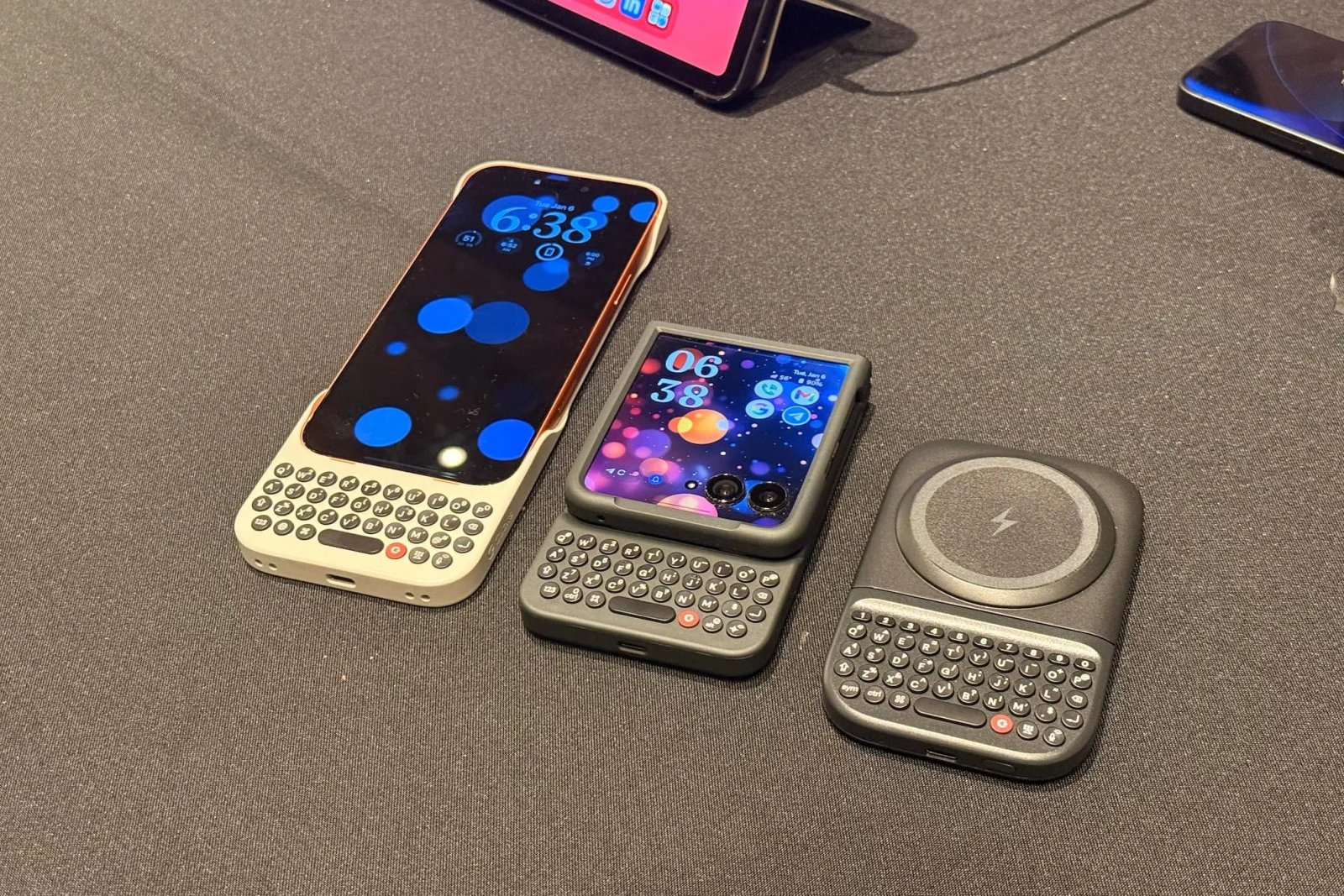
This one made a lot of headlines just prior to CES, but in case you haven’t heard of it, the Clicks Power Keyboard a nifty little MagSafe bluetooth keyboard for your iPhone, and it also has a built in battery bank for recharging your phone if needed.
Clicks started making waves last year with the Clicks phone case, and the Clicks Power Keyboard solves one of the main downsides to the product: reusability. With the Clicks case, you were out of luck once you decide to upgrade your phone. Now, with the Power Keyboard, you can use it interchangeably between different iPhone and Android models with support for Qi2/MagSafe.
This also has a lot more functionality than the original Clicks case, since it’s bluetooth. Personally, I see a lot of potential for this with Apple Vision Pro, since you’ll no longer need to worry about pecking that floating virtual keyboard.
Lastly, it does feel pretty nice in the hand. If you have an iPhone Pro Max of sorts, the weight distribution isn’t fantastic, but it honestly feels kind of perfect when you’re using it with the smaller iPhone models.
Keychron is well known for making fantastic mechanical keyboards for Mac, and at CES, they unveiled the Q Ultra lineup.
The Q Ultra lineup features an 8K polling rate in wireless mode, and offers up to 660 hours of battery life while in 8K mode. It also has brand new Silk POM switches, and certainly feels nice to type on. As always, you get a nice aluminum body, hot swappable switches, and a great overall experience.
HyperDrive Next serves as a high-speed solution for interfacing with your high-performance NVMe SSDs. It supports Thunderbolt 4 and USB4 up to 80Gbps, delivering up to 64Gbps of transfer speed for any large file transfers you may have. Granted, you’ll need a PCIe Gen 4×4 SSD to take advantage of that performance.
Unlike other PCIe enclosures, the new HyperDrive Next supports other M.2 modules, including AI accelerators and network cards. If a modular solution for fast storage over Thunderbolt is something that interests you, then HyperDrive Next is a product for you.
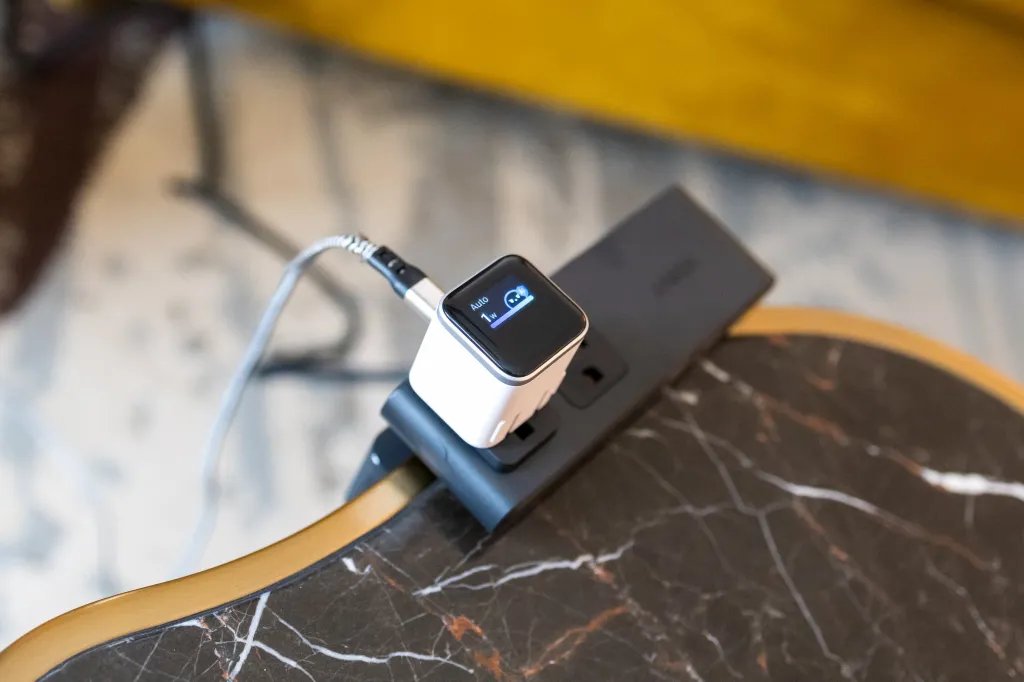
Anker unveiled a new 45W charge brick at CES 2026, but this one has a smart display. With an iPhone, you can see what device you’re connected to, how fast its charging, and you can manually adjust the charge speed. The prongs can also adjust up to 180 degrees – giving you two different angles for plugging into the wall.
It comes in four colors: white, black, blue, and orange – though the orange won’t be available quite yet. It’s launching for $39.99, and you can preorder it now from Anker with a $10 pre-order discount.
Belkin custom screen protectors
Belkin announced something rather interesting at CES: screen protectors that you can engrave your own artwork onto – in collaboration with ScreenSkinz.
They were handing them out at CES Unveiled, and frankly I do wish I ended up taking one so I could’ve had longer term impressions. Nonetheless, with these screen protectors, you can etch whatever artwork you want into the front, and said engraving will only be visible while the screen is turned off. When the screen is on, you can’t see the etching.
I can’t necessarily speak for how the etching feels in day to day use, but with my limited impressions, the product does seem to live up to its promises.
They’re not available quite yet, but you’ll be able to customize them on Belkin.com in a few weeks.
Wrap up
All in all, this is far from everything that I got to see at CES, but in a world where companies like AMD can run an over 2 hour keynote talking purely about AI with no on-stage announcements for consumers, it was actually somewhat refreshing just seeing neat new accessories for Apple products.
I’ll have more to come in the near future as these products begin to become widely available, including a number of hands-on impressions and reviews! Stay tuned.
Read more CES coverage from across the network:
One last thing of note: Nvidia unveiled their own self driving software stack at CES 2026, and I’m actually really excited about the future of that technology. Tesla hasn’t had much competition when it comes to self driving software in consumer vehicles, and Nvidia seems to be fairly advanced in what they’ve developed so far. Read more about it on Electrek.
While Ikea is legendary for its reasonably priced, piece-it-together furnishings gracing flats, dorms and primary houses, you hardly pay attention concerning the corporate within the tech sphere. While Ikea has dabbled in good house generation in previous years, its choices had been restricted, brief and steadily required partnerships with 3rd events. At CES 2026, all that modified.
This was once Ikea’s first CES, which is a remark in itself. The Swedish furnishings (and meatball) corporate got here well-prepared, bursting onto the scene with formidable lights and safety choices. It may exchange the good house international, and I’m now not certain different manufacturers are in a position.
Smart lighting fixtures with a pleasant glow
Ikea’s new good lighting fixtures and plugs are a daring step for the corporate.Ajay Kumar/CNET
One of probably the most visually spectacular merchandise from Ikea was once the Varmblixtgood house lighting fixtures (sure, the vintage Ikea names stay even in its tech endeavors). You can have heard of the Varmblixt line sooner than, however now Ikea is including good generation to those trendy lamps.
The lighting fixtures are available two types. One is a doughnut-like ring that you’ll be able to cling from a wall or position on a close-by desk, casting a heat gentle all through the room in any colour you select. The different is a draping LED pendant lamp, extra at house putting in a nook, with sun shades to be had throughout all of the white spectrum.
Ikea’s latest lighting fixtures are app and remote-controlled.Ajay Kumar/CNET
Both lighting fixtures inspired me, now not handiest as a result of their distinctive and really Ikea look, but in addition for the brand new app controls that help you modify the brightness and colour at will. They additionally include remotes that come with a dozen presets, if your telephone is not to hand. For one of the crucial first proprietary good lighting fixtures Ikea has made, it is an excellent appearing.
If you are considering a bit of smaller, Ikea’s new good house has that lined, too. The Kajplats line provides 11 types of good bulbs you’ll be able to screw into sockets you have already got, changing your outdated lighting fixtures to good, app-controlled variations.
Then there is the Grillplats, a good plug that lets you use app controls on any present plug-in lamp, in addition to different units like fountains or warmers. What we noticed of those app controls at CES seemed simple to grasp and efficient.
Ikea’s good lighting fixtures have daring designs and simple app controls.Ajay Kumar/CNET
One closing observe: While it is not technically a part of the good house, Ikea additionally introduced Bluetooth dice audio system, which you’ll be able to hyperlink, stack and experiment with to fill a small house with customizable sound in addition to gentle.
The maximum reasonably priced house safety I’ve noticed
Ikea’s safety sensors are extremely reasonably priced.
Ajay Kumar/CNET
While Ikea is not freeing any safety cameras (no less than now not but), the corporate did unveil a line of safety sensors, a specifically daring transfer that provides sufficient choices for most of the people to transform their house safety into a completely Ikea-managed zone.
Sporting glorious names like Timmerflotte, Alpstuga, Klipbok and Myggspray, Ikea’s good sensors are all Matter-compatible, which means that you’ll be able to use them with Ikea’s app or common platforms like Apple Home and Google Home. They come with movement sensors, get entry to sensors for doorways or home windows, air high quality sensors, water leak detectors and different choices.
Ikea’s sensors come with door and movement sensors in addition to leak detectors and temperature sensors.
Ajay Kumar/CNET
Especially spectacular are the costs. One of Ikea’s attracts is affordability, and that very same promoting level applies to house safety. These units, together with good bulbs and good plugs, are all beneath $10 every (Varmblixt lamps are an exception, beginning at $100).
That makes IKEA one of the vital reasonably priced techniques I’ve ever noticed to arrange your personal good safety device, even in comparison to the lowest-cost price range programs and DIY kits. If instrument efficiency impresses me through the years as I take a look at it, Ikea may transform one in every of my go-to suggestions for first-time consumers of house protection tech.
Most of those merchandise are to be had on the market this month, with minor exceptions, such because the air high quality sensor, which is scheduled for unencumber in April. If you are , you’ll be able to get started development your Ikea good house in brief order.
Is this the yr of Ikea within the good house?
Along with good house tech, Ikea could also be freeing Bluetooth speaker cubes.
Ajay Kumar/CNET
I’ve hardly mentioned Ikea in my house tech suggestions. You would possibly not in finding Ikea on any house product advice lists, out of doors of its years-old good blinds. They have not had a vital presence on this box sooner than, specifically in the United States. However, 2026 may well be the yr that adjustments, as those new choices seem to be severely aggressive.
As I get started checking out Ikea’s good lineup as new merchandise transform to be had, I’ll help you know if they provide budget-friendly safety choices and if any finally end up on our best possible product lists. Right now, issues glance promising for the Swedish titan.
Another thriller is at your door with Devkhel. With a slightly surprising announcement, it has made a knock during the social media care for of Cinema Rare. It is directed via Chandrakant Lata Gaikwad. The theme of this sequence has been taken from mythology, in which there’s a conventional people persona who heisted 4 Vedas from Brahma Deva. Later on, he was once defeated via Matsyavatara of Lord Vishnu. However, after that, Shankasur was once blessed as a result of he realised his mistake.
When and Where to Watch
Devkhel goes to be on Z5 quickly; alternatively, the date isn’t identified but.
Trailer and Plot
Devkhel is a thriller mystery sequence according to the topics of mythology. There isn’t any trailer out for it but. The sequence would possibly take time to hit the monitors. Not a lot from the tale is understood; alternatively, it is a tale according to the Lord Vishnu’s Matsyavatara in which a folklore steals all 4 Vedas from Brahma Deva. Knowing this, Lord Vishnu takes Matsyavatara and defeats him. Later, he will get blessed as he feels grounded for his mistake. The plot of this sequence takes you to a theme like that and allows you to attach the dots of why the occasions occur.
Cast and Crew
Chandrakant Lata Gaikwad is the director of the sequence Devkhel. The actors who’ve labored in it are Prajaktta Mali, Veena Jamkar, Mangesh Desai, Yatin Karyekar, Onkar Bhojane, Arun Nalawade, Sayali Deodhar, Ambarish Deshpande, Uma Sardeshmukh, Rohan Surve, and Ankush Chowdhary. Chandrakant Lata Gaikwad and Nikhil Ashok Palande have written it.
Reception
It is a Marathi sequence, however it’s nonetheless going to seize the target audience who talk different languages. This obviously tells about its reputation on social media, because it has no longer but been launched.
Catch the most recent from the Consumer Electronics Show on Gadgets 360, at our CES 2026 hub.
After Users, OpenAI Now Wants Hospitals and Doctors to Use ChatGPT
Realme 16 Pro Series With 200-Megapixel Camera Goes on Sale in India: See Price, Offers, Features
My canine, an lovable 70-pound Lab combine, is very best in each and every manner. But I admittedly concept he used to be rather less very best when he as soon as got here in thru a swinging canine door adopted by way of one of the vital many lizards that run round my house at the Florida Gulf Coast.
That by no means must occur once more.
High Tech Pet, a long-running participant in automatic puppy get admission to, is showcasing right here at CES 2026 its not too long ago introduced Power Pet Roll-Up Door, an absolutely computerized, Wi-Fi-enabled smart pet door designed to deal with safety, insulation and comfort problems commonplace with conventional puppy doorways.
Unlike typical puppy doorways that swing open or use versatile flaps, the Power Pet Roll-Up Door opens vertically the usage of a motorized roll-up mechanism. When a puppy dressed in a suitable ultrasonic collar approaches, the door detects the sign and raises the panel to permit access or go out, then closes at the back of them. Think of it as a little bit storage door to your canine or cat, with the opener worn on its collar.
For extra, we are monitoring the newest information from CES, so take a look at again for normal updates.
Don’t omit any of our independent tech content material and lab-based evaluations. Add CNET as a most popular Google supply.
A unique option to puppy get admission to
High Tech Pet says the vertical roll-up design is helping give a boost to insulation and safety in comparison with flap doorways, which will let in drafts and are steadily simple for natural world or intruders to push thru. Because the panel stays sealed when no longer in use, the corporate says it supplies higher resistance to climate and temperature loss, regardless that real-world efficiency will in the end rely on set up high quality and the way it is used.
The door is designed for each canines and cats, from kittens to 200-plus-pound pooches, and is to be had in a couple of sizes and mounting choices (door, wall, patio). Its vertical opening additionally lets in it to slot in tighter areas, together with beneath window sills or inside door panels that may no longer accommodate a swinging flap.
Power Pet works with sensible controls and far flung get admission to
The Power Pet Roll-Up Door comprises integrated Wi-Fi connectivity and works with the corporate’s Power Pet Door app. Through the app, you’ll open or shut the door remotely, set get admission to schedules and modify modes relying on whether or not pets are allowed in, out or each.
Remote keep an eye on turns out to be useful for homeowners who need to set up puppy get admission to whilst clear of house or preferring to stay the door locked all through sure hours. As with different attached house gadgets, long-term reliability and app usability might be necessary components, in particular for a product that controls bodily get admission to to the house.
The door nonetheless purposes routinely with out handbook enter when paired with the ultrasonic collar, which serves as the main cause for opening. Keep in thoughts that High Tech Pet has used an identical collar-based techniques in earlier merchandise, depending on ultrasonic indicators slightly than cameras or biometric reputation.
Installation and design issues
High Tech Pet says the Power Pet Roll-Up Door may also be put in in partitions, patio doorways or usual doorways — relying at the house’s structure. Installation complexity will range, particularly for wall-mounted setups that require slicing into external surfaces.
Visually, the door leans towards a contemporary, minimum design slightly than the utilitarian glance standard of older puppy doorways. That might make it extra interesting for householders who need puppy equipment to mix in with extra recent interiors.
The corporate additionally emphasizes safety, noting that the door is designed to stay locked until activated by way of a registered collar or the cellular app. This is helping cope with a commonplace fear for folks whose properties are at flooring degree.
The Power Pet Roll-Up Door retails at $580, which is considerably upper than elementary puppy doorways or even many digital flap-based fashions.
High Tech Pet introduced the door in November 2025, with CES 2026 serving as its first main public show off.
A distinct segment however rising class
Smart puppy doorways are nonetheless a moderately small a part of the puppy tech and sensible house global, however they level to a broader pattern we’ve got been seeing at CES lately. In different phrases, automation is creeping into on a regular basis, steadily overpassed duties — like letting your puppy out and in of the home. Products just like the Power Pet Roll-Up Door are not about flashy novelty such a lot as small however significant enhancements in comfort, potency and protection.
Qualcomm offered the Snapdragon 8 Gen 5 chipset in November remaining yr, with efficiency upgrades over the Snapdragon 8 Gen 3. It provides a top clock pace of as much as 3.8GHz and lines Qualcomm’s customized Oryon CPU. The chipset properties Adreno GPU and a Hexagon NPU for enhanced AI duties. It is provided with Snapdragon X80 5G Modem-RF System AND THE FastConnect 7900 gadget, enabling fortify for Bluetooth 6 and Wi-Fi 7. Qualcomm claims the Snapdragon 8 Gen 5 delivers as much as 36 p.c higher CPU efficiency in comparison to the Snapdragon 8 Gen 3.
The OnePlus 15R has already introduced in India as the primary smartphone powered by way of this new chipset. Vivo’s S50 Pro Mini will also be bought in China with the similar chipset. However, a number of different producers are making ready to release their very own Snapdragon 8 Gen 5-powered smartphones. These upcoming handsets come with fashions just like the Realme Neo 8, iQOO Z11 Turbo, and Motorola Edge 70 Ultra.
Realme Neo 8
Realme’s upcoming Neo 8 is showed to come back with the Snapdragon 8 Gen 5 chipset. It might be introduced later this month in India. It is showed to come back in a Cyber Purple colourway with a clear rear panel. The handset is more likely to include a triple rear digital camera setup, with one of the most sensors providing 120x zoom. This hints against the presence of a periscope telephoto lens at the smartphone. Realme’s signature Awakening Halo lighting fixtures characteristic can be noticed along the digital camera island.
Realme Neo 8 Photo Credit: Realme
Beyond the Snapdragon 8 Gen 5 chip, the large spotlight of the Realme Neo 8 may well be an 8,000mAh battery. It is tipped to come back with a 6.78-inch LTPS flat show with 1.5K solution.
iQOO Z11 Turbo
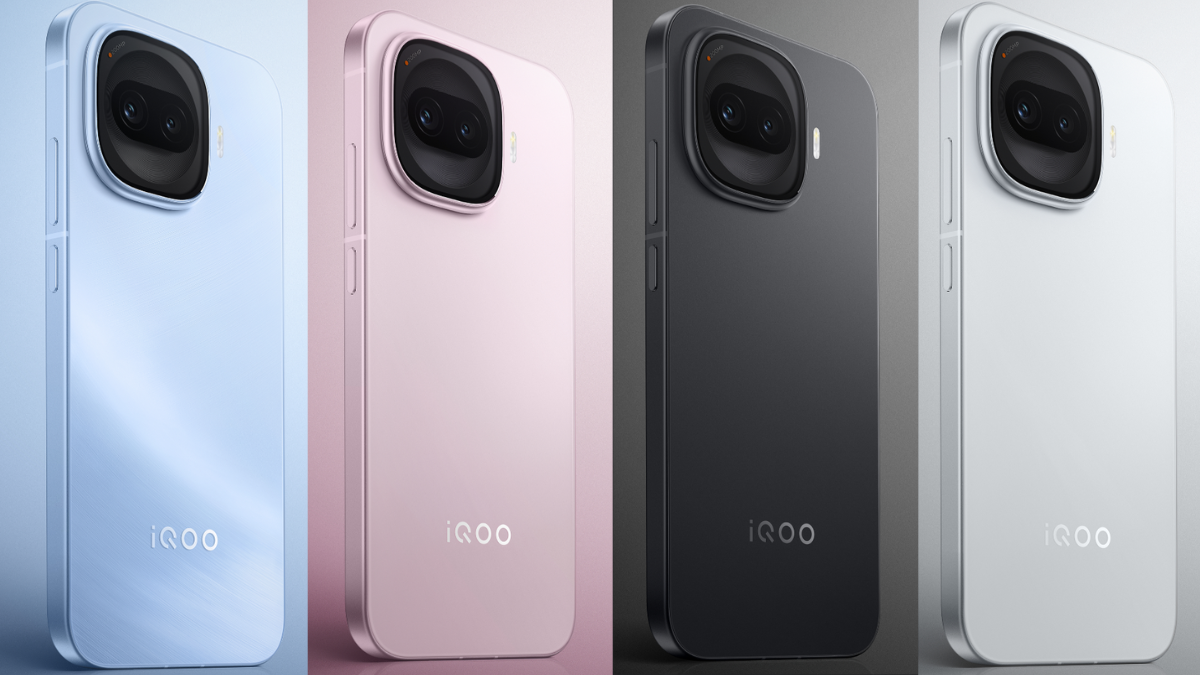
iQOO has been teasing the iQOO Z11 Turbo in China for a while now, regardless that the corporate hasn’t introduced the release date of the telephone. However, it’s showed to land in January with the newly introduced Snapdragon 8 Gen 5 SoC from Qualcomm. The handset is lately up for pre-order within the nation in Canglang Floating Light, Halo Powder, Extreme Night Black, and Sky White (translated from Chinese) finishes.
The iQOO Z11 Turbo will characteristic a 200-megapixel number one digital camera at the again. The handset can have a steel body and a tumbler again panel with rounded corners. The telephone will include an IP68 + IP69-rated construct for mud and water resistance. For biometric authentication, the telephone can have an ultrasonic fingerprint scanner. It will price in China between CNY 2,500 (more or less Rs. 32,000) and CNY 3,000 (about Rs. 38,000).
Past leaks prompt a 32-megapixel entrance digital camera and a 7,600mAh battery with 120W stressed out charging fortify for the iQOO Z11 Turbo.
Motorola Signature
Motorola hasn’t explicitly showed the chipset of Motorola Signature, however it is broadly rumoured and presumed that the approaching telephone will send with the Qualcomm Snapdragon 8 Gen 5 chipset. It is scheduled to release on January 7 and can cross on sale via Flipkart. It has a hollow punch show design and a customisable shortcut key.
The upcoming smartphone might lift a triple rear digital camera unit, together with A 50-megapixel sensor and a periscope telephoto sensor. It is most probably to supply as much as 16GB of RAM. It is rumoured to characteristic a 6.7-inch OLED show with 1.5K solution. It is alleged to pack a 5,200mAh battery with fortify for 90W stressed out speedy charging and 50W wi-fi charging.
Moto X70 Air Pro
Motorola’s Moto X70 Air Pro could also be more likely to include the Snapdragon 8 Gen 5 chip. Motorola is but to substantiate its release date, however it is rumoured to characteristic a 6.78-inch 1.5K (1264 x 2780 pixels) OLED panel. It may include Android 16 out-of-the-box. This style may be introduced in 8GB, 12GB, and 16GB RAM choices and 256GB, 512GB, and 1TB garage choices.
At the again, the Moto X70 Air Pro may boast a triple-camera setup with 3 50-megapixel sensors, together with a periscope telephoto lens that helps 3x optical zoom. It is anticipated to characteristic a 50-megapixel selfie shooter. It is tipped to characteristic a 5,100mAh battery with fortify for 90W stressed out speedy charging.
Besides those fashions, manufacturers like Vivo and Honor are anticipated to introduce new flagship smartphones that includes this newest SoC within the coming months, however the names of those smartphones, or their specs, are lately unknown.
Catch the newest from the Consumer Electronics Show on Gadgets 360, at our CES 2026 hub.
Modern smartphone cameras are spectacular beasts, as many digicam telephones mix state of the art {hardware} with complex symbol processing functions. Some of the extra notable inventions in recent times come with periscope cameras, 200MP sensors, and all-pixel autofocus.
However, one in all my favourite {hardware} options arrived in 2022: one-inch digicam sensors. Unfortunately, adoption of this tech has reputedly stalled within the ultimate yr or so, and it doesn’t seem like we’ll see a lot of it in 2026. What went flawed?
Do you favor bigger digicam sensors or extra megapixels?
253 votes
One-inch cameras had been the longer term — till they weren’t
Aamir Siddiqui / Android Authority
One-inch 50MP digicam sensors debuted at the Xiaomi 12s Ultra again in 2022, and it in reality felt like this was once the following giant factor. In truth, Xiaomi, vivo, OPPO, and HUAWEI wasted little time bringing this tech to their top-end telephones.
Fast-forward to 2026, regardless that, and it sort of feels like smartphone makers aren’t so loopy about this era. Vivo presented a one-inch 50MP primary digicam at the X90 Pro and X100 Pro, however skipped it on next releases. The Xiaomi 13 Pro additionally used this sensor, however next Pro handsets, such because the Xiaomi 17 Pro Max, don’t come with it.
Don’t need to leave out the most efficient from Android Authority?
It’s no longer all unhealthy information, as HUAWEI continues to provide this option on its Pro and Ultra telephones. OPPO and Xiaomi now not be offering this option on their Pro handsets however retain it on their Ultra fashions. In different phrases, you’ll nonetheless in finding telephones with one-inch sensors when you glance exhausting sufficient or are prepared to import them. However, fewer telephones be offering this digicam era nowadays.
I additionally anticipated the likes of Samsung, Google, Apple, and Sony to enroll in the one-inch sensor teach, however this hasn’t came about thus far. That’s disappointing, as those huge sensors be offering more than one advantages over smaller cameras.
One notable perk is a shallower depth-of-field impact with out resorting to tool trickery. This leads to pictures with extra delightful and correct bokeh. These huge sensors additionally boast spectacular light-gathering, leading to brighter, cleaner photographs with advanced dynamic vary. This additionally reduces movement blur, because the shutter doesn’t have to stick open as lengthy, permitting you to freeze topics even in blended lighting fixtures. Phones just like the Xiaomi 14 Ultra and vivo X100 Pro additionally make excellent use of those sensors, turning in spectacular low-light snaps, whilst the latter even gives a hand-held astrophotography mode.
Why huge digicam sensors have stalled out
Robert Triggs / Android Authority
Perhaps the most important reason we haven’t observed wider adoption of one-inch cameras is house constraints. These sensors absorb numerous house throughout the telephone, forcing producers to put in force large digicam bumps. Needless to mention, those massive housings are ugly and can lead to a much less ergonomic software. I do know I every so often combat to put my index finger when the use of a telephone with an Oreo-sized digicam bump. These huge housings too can motive a telephone to wobble considerably when used on a flat floor.
It additionally doesn’t assist that Apple and Samsung went in some other route altogether by way of providing ultra-thin smartphones in 2025. These gadgets are so skinny that cramming more than one rear cameras into the body is a problem, let by myself a one-inch digicam sensor or a telephoto lens. Thankfully, shoppers have in large part disregarded skinny gadgets just like the Galaxy S25 Edge because of the compromised cameras, shorter battery lifestyles, and excessive value tags.
From the rising significance of secondary cameras to house constraints, there are a couple of conceivable the reason why one-inch sensors have not really taken off.
Another factor with one-inch cameras is that the sensor will have to be further from the lens for optimum focusing and symbol high quality. In truth, HUAWEI’s Pura 70 Ultra (observed above) includes a retractable number one digicam lens to extend the space between the lens and sensor. HUAWEI and Xiaomi have additionally paired one-inch cameras with a variable aperture to fight focusing and depth-of-field problems related to those huge sensors. But retractable lenses and variable apertures additionally build up {hardware} complexity and force up prices.
Speaking of prices, I believe that businesses like Apple and Samsung haven’t followed one-inch cameras as a result of those parts would scale back benefit margins. Instead, Samsung specifically sticks with the similar primary digicam sensors for more than one years.
Hadlee Simons / Android Authority
Another attainable reason massive primary sensors haven’t won traction is that telephoto cameras have change into an increasing number of vital — I do know that is my favourite digicam on a number of flagships in this day and age. These zoom-focused modules absorb vital house, in particular as producers be offering an increasing number of bigger telephoto sensors and extra complicated periscope designs. It subsequently is smart to quite scale back the principle digicam’s dimension to allow higher zoom.
Smaller digicam sensors have additionally stuck up with one-inch sensors in many ways. Vivo switched to a smaller, LYT-818 primary digicam (1/1.28-inch) for the X200 Pro. It claimed that this digicam has higher video high quality than the one-inch IMX989 sensor and related photograph high quality. Of route, vivo when put next this smaller primary sensor to the first-generation one-inch sensor moderately than the second-generation LYT-900. Nevertheless, the vivo X300 Pro and OPPO Find X9 Pro now use the LYT-828 primary digicam sensor (1/1.28-inch), which gives complex HDR functions and ultra-high conversion acquire tech that’s lacking from one-inch sensors.
Are one-inch sensors utterly useless in 2026?
Dhruv Bhutani / Android Authority
That all stated, it appears like one-inch digicam sensors aren’t going any place simply but — a minimum of no longer utterly. In truth, contemporary tendencies may result in extra telephones with this tech someday. The brand-new Xiaomi 17 Ultra includes a new one-inch sensor from the Chinese model Omnivision, and a fellow Chinese corporate, SmartSens, introduced a one-inch sensor in July 2025.
This is an encouraging building, because it method Sony is now not the one corporate providing one-inch cameras. In principle, this different provide chain may scale back prices and, subsequently, result in higher proliferation of those sensors.
However, Sony additionally turns out bullish on huge digicam sensors. The corporate disclosed a graph previous this yr that predicts huge sensors to develop in recognition on high-end telephones till 2028.
“Historically till now, the era of our cell sensors has advanced first via more than one cameras after which larger-sized sensors as much as 1-inch, and this has helped our trade expansion,” Sony instructed Android Authority in line with emailed questions, whilst noting that the adoption of huge sensors generally was once progressing “easily.”
Then once more, the following giant digicam sensor improve is probably not a one-inch sensor in the end. Sony lately introduced the 200MP LYT-901 digicam sensor (1/1.12-inch), which is considerably bigger than present 200MP sensors and quite smaller than 50MP one-inch sensors. Leaks recommend that OPPO and vivo may make the most of this sensor as the primary digicam of their upcoming Ultra telephones.
As such, the Xiaomi 17 Ultra and its new one-inch sensor could be the exception moderately than the rule of thumb in 2026. That’s to not say smartphone cameras in 2026 received’t be improbable, however the dream of one-inch sensors on all flagships more than likely isn’t coming true this yr.
Thank you for being a part of our neighborhood. Read our Comment Policy earlier than posting.
We spend hours trying out each and every services or products we evaluate, so you’ll be sure to’re purchasing the most productive. Find out extra about how we check.
Hisense L9Q: two-minute evaluate
The Hisense L9Q represents the top of what Hisense can do for house theater projection. It’s a sizzlingly shiny 4K extremely brief throw (UST) projector that boasts the large colour gamut of triple-laser projectors along the correct colour of Pantone Validated {hardware}.
Where most other projectors settle for two or maybe four speakers, the L9Q packs in a whopping ten Devialet-designed speakers in a 6.2.2 configuration for the most impressive sound I’ve heard from a projector. It may not beat actual surround sound speaker systems, but it’s enough to put even the best soundbars to shame.
The L9Q is even a solid gaming projector with its ability to display 4K 60Hz gameplay with low input lag or switch over to 1080p 240Hz for extra smooth visuals and responsive gaming.
It’s a serious package, but it comes with a seriously high-end price at $5,999 / £3,999. That may seem steep, but considering how quickly the prices of TVs ramp up when you go past 75 inches, the math starts to work in Hisense’s favor. The L9Q can put out a 150-inch picture just as easily as it can do 100 inches, and has flexible setup features to get up and running.
For most people who don’t need the added brightness and already have a good sound system, the $3,499 / £2,499 Hisense PX3-Pro will be a more reasonable option. But if you demand the best, the L9Q delivers.
The Hisense L9Q is to be had for $5,999 / £3,999. In Australia, the projector comes bundled with a 120-inch display and sells for AU$9,999. Given that it introduced against the tip of 2025, the L9Q is not likely to peer any primary reductions till someday in past due 2026.
Sign up for breaking information, opinions, opinion, most sensible tech offers, and extra.
The Hisense L9Q comes with a full-size faraway keep watch over and makes use of the Google TV platform for streaming (Image credit score: Future)
TheL9Q has four HDMI ports (1 with eARC and two HDMI 2.1) and supports gaming at 1080p/240Hz (Image credit: Future)
Hisense L9Q Review: design and features
Stunning design
Projector, sound system, and streamer all in one
Plentiful connection options
Hisense here has created what I think is its best-looking UST projector yet. The L9Q borrows some of the ideas from the retro-futuristic PX line to deliver a bronze-kissed work of art. Most of the frame of the L9Q is a little boxy, keeping it simple with clean lines, but the front has small channels with power indicator lights and the top bears a curved sort of wave meant to evoke Roman amphitheaters. That’s not just for style either, as the top integrates several speakers. The front is emblazoned with concentric rings and a grille on the front hides even more speakers. Around the side, there are two discs housing yet another pair of speakers.
While the design is very appealing, it’s also functional. The projector sits on four height-adjustable feet to help you level the projector and get a perfectly square image. Where its Hisense L9G predecessor was designed with specific screen sizes in mind (and included those screens), the L9Q is more flexible, offering adjustable keystone and focus to let you adapt it to your needs. The flip side is that the L9Q does not include any screen, which was an addition worth easily $1,000 on earlier models. Whatever screen you do set it up with, the projector can automatically fit the picture to it, though it’s a software solution and will reduce the actual image resolution.
Another set of sensors at the top of the projector helps protect your eyes. When these detect someone is close to the projection, they’ll dim the display, and after 5 seconds, turn it off entirely. That’s good to have since this projector uses bright lasers, and in my testing, the sensors have been fairly responsive.
Another update with the L9Q is that the throw ratio has been reduced to 0.18:1. This lets you get a big image while getting the projector closer to the wall.
Around back, the L9Q has a good selection of connections. You get four HDMI ports, two of which meet the version 2.1 spec. A separate HDMI offers eARC, so you don’t have to use up an HDMI 2.1 port for audio output. There’s also an optical digital audio output, an Ethernet input, and an RF input for the L9Q’s ATSC 3.0 receiver. The projector even supports a PVR recording system for broadcast TV using an attached storage device. Three USB ports round out the options, with two offering USB 3.0 speeds, and one of those using a Type-C connection.
Even if you don’t connect the projector to an external source, you can stream content on the built-in Google TV operating system. While many projectors include built-in operating systems like this, the L9Q actually has the hardware to run it smoothly. In my time testing, the system remained responsive even as I launched and navigated apps, and I could reliably control the projector at all times. The Wi-Fi 6E connection used by the streaming platform is also robust.
Hisense’s included remote is almost the same as what came with the PX3-Pro. It’s a long silver handset made out of plastic with the typical Google TV navigation ring. At the top, it features a handful of shortcuts to streaming apps, including one customizable shortcut. There’s also a dedicated input select button, which is always handy to have.
One difference between the remotes is that instead of having a control for brightness, the L9Q remote has a channel select button. This and the volume controls are on tall, pill-shaped buttons that are easy to feel out. One great feature of the remote is that it reacts to movement and will light up many of the controls if you simply move it. This is very helpful in the typically dark home theater environment.
Design and features score: 5/5
Powered by 5,000 lumens, the Hisense L9Q’s picture stands out even in bright lighting conditions (Image credit: Future)
Hisense L9Q Review: performance
Wonderfully bright picture with rich color
Support for 1080p/240Hz gaming
Potent 10-speaker Dolby Atmos sound
The Hisense L9Q brings UST projector picture quality to new heights. Hisense already impressed me with earlier models such as the L9G and PX3-Pro, but the L9Q carries the torch even further. It’s their brightest projector yet while still providing the stunning color of Hisense’s RGB laser light engine.
Ultimately, its specified 5,000 lumen brightness may be overstated, as maximum brightness comes via a high-brightness mode that results in some horrible color shift. But even without that, the projector beams a brilliant picture. The vivid colors it is capable of don’t mean a sacrifice in accuracy either, as the L9Q is both Pantone Validated and Pantone SkinTone certified.
All of that is delivered with strong contrast. The black levels aren’t so low that letterbox bars disappear completely, especially in darker movie scenes, but when the projector is beaming bright, the bars become hard to see thanks to the projector’s contrast.
With most picture presets, you’ll be facing some unfortunate motion smoothing, though, since the projector’s SDR and HDR picture profiles default to using motion smoothing. This has its benefits for some content by smoothing out camera pans and moving objects, but it adds a soap opera effect to movies. The “Film” setting avoids these unsightly artifacts while still keeping judder subdued, however.
The L9Q delivers good focus from corner to corner with manual setup, making the most of its 4K resolution. And the amount of detail you can see with the picture stretching up to 100 inches or larger is exceptional.
Gamers can get plenty from the L9Q as well. Even when it’s beaming a 4K 60Hz picture, it’s able to keep the input latency low enough to make for a fairly responsive experience. Like the Hisense PX3-Pro, the L9Q can drop down to 1080p and crank its refresh rate to 240Hz for super smooth gaming (just make sure to set the HDMI input source to Enhanced Pro or it will top out at 120Hz). I took it for a few runs in Hades, and it was stunningly smooth with virtually no detectable lag.
Though the L9Q did a good job of hiding the rainbow effect most of the time, it is susceptible to it like many other DLP projectors. I didn’t notice it much when watching 4K content, where it only occasionally cropped up and was most visible on white areas of the image. It was also more noticeable while running the projector at 1080p/240Hz.
The projector’s very robust speaker system was an extra pleasant surprise. It uses a total of 10 speakers in a 6.2.2-channel configuration. Four of those speakers are in the front, two on the sides, with four more positioned along the curved top. It’s not as engrossing as a proper surround system or as booming as a double-sub setup (nor is it hitting deep sub-bass), but the sound is weighty, loud, and presents a surprisingly wide soundstage for such a small unit.
With Dolby Atmos audio piping out of the speakers during Star Wars: The Force Awakens, blaster shots seemed to come out from different points in space, there was some height to the TIE fighters flying over, and explosions were properly booming. Ultimately, it’s worth pairing a projector of this quality with an external sound system, but if you don’t, there’s a lot to get from the built-in speakers.
The L9Q has a very appealing, yet functional design (Image credit: Future)
Hisense L9Q Review: value
High price
Extra value as an all-in-one system
No projector screen included in US and UK
The Hisense L9Q is a serious piece of kit, and it has the price to match. At $5,999 / £3,999, you have to expect a lot from this home theater projector, and for the most part, it delivers. Its picture is bright and color-rich, it has powerful built-in sound, and it has Google TV for streaming. But for most people, the $3,499 Hisense PX3-Pro is going to be the more sensible option, since it offers much the same experience but without quite the same brightness, audio power, or extensive connectivity options.
It’s kind of a shame that the L9Q doesn’t come bundled with a projector screen in the US and the UK, but its flexible lens control means you can pair it with whatever screen you want for the most part. Hisense had offered pre-order customers the option of either a free screen or its HT-Saturn sound wireless speaker system, both of which would have made this an astounding value, but that deal appears to have since expired.
French speaker and amplifier manufacturer Devialet designed the L9Q’s built-in audio system (Image credit: Future)
Swipe to scroll horizontally
Hisense L9Q
Header Cell – Column 0
Notes
Rating
Design and features
The Hisense L9Q is gorgeously designed and feature-packed. It has the most robust sound system I’ve heard built into a projector, it offers bright and flexible projection, and it has Google TV and plenty of ports for other video sources.
5/5
Performance
The L9Q’s picture is gorgeous. This projector beams bright, has a wide color gamut, strong contrast, and great clarity. It works well for movies and games alike. And that picture is paired with impressive speakers. Even the operating system runs smoothly, which is not always the case with projectors running Google TV.
5/5
Value
The Hisense L9Q packs a lot into one package. Its price isn’t surprising for even just its projection, but the speaker system makes it even more reasonable. It’s just too bad Hisense isn’t throwing in a screen as well.
My testing evaluates the projector’s performance with respect to its price and competition from other models that my colleagues and I at TechRadar have tested.
I have been testing projectors since 2021 and displays for even longer.
NASA’s Curiosity rover simply shared a a laugh vacation greeting from Mars! The venture crew had Curiosity snap some pictures at two other instances on November 18, 2025. They blended those photographs—one taken within the morning and some other within the overdue afternoon—giving us an exquisite view that presentations a Martian “dawn” and “sundown” : a morning blue sky and a day yellow hue. This cheerful postcard is a follow-up to equivalent ones Curiosity took again in 2023 and 2021.
Creating the Holiday Postcard
According to NASA, venture controllers steered Curiosity to make panoramic pictures at two moments on Sol 4722 at roughly 4:15 pm and Sol 4723 at roughly 8:20 am (native Mars time). The two black-and-white panoramas have been then stitched in combination and colourised (with the morning aspect blue and afternoon yellow) to carry out the Martian surroundings. The closing symbol is named an inventive interpretation by means of NASA and is geared toward highlighting more than a few main points.
Curiosity’s Legacy and Public Outreach
Curiosity landed in 2012 and has since coated a distance of greater than 25km across the Gale Crater and has sampled 42 rocks. NASA observes that the rover has additionally equipped scientists with courses at the historical past of Mars and the way it could have had lifestyles. This is a vibrant landscape that showcases the legacy of the rover and the NASA historical past of publishing spectacular Mars photographs. In 2023 and 2021, Curiosity created equivalent postcards with science and birthday celebration in every symbol.
Catch the newest from the Consumer Electronics Show on Gadgets 360, at our CES 2026 hub.
Realme 16 Pro, Realme 16 Pro+ Price in India, Storage Configurations Leaked
iPhone 17 Pro, iPhone 17 Pro Max Users Report Charging-Related Static Speaker Noise
Google quietly introduced its more moderen landscape machine to the Pixel 8 sequence by the use of a Pixel Camera replace.
The new landscape mode makes use of HDR+ to sew higher-quality frames with higher lighting fixtures and element.
Night Sight strengthen is the actual game-changer, letting you seize panoramas in low mild, town nights, or dim interiors.
Google is respiring new existence into its older flagship with a marvel replace that brings the Pixel 9’s landscape mode to the Pixel 8 sequence. This replace overhauls the interface and brings again the preferred Photo Sphere enjoy (type of), which was once removed from new devices starting with the Pixel 8 in 2023.
The update was released quietly with Pixel Camera version 10.2, which began rolling out in early December and is now on the Play Store (via 9to5Google). For Pixel 8 house owners, this replace gives a extra intuitive, guided taking pictures enjoy with smoother stitches and higher effects, particularly when used with Night Sight.
This up to date landscape mode makes use of the Pixel’s complete HDR+ photograph machine to take particular person fine quality frames and sew them in combination. This manner collects extra symbol knowledge, leading to higher-quality photographs and stepped forward dynamic vary.
The interface is encouraged by means of Photo Sphere and makes use of floating dots to steer you during the seize procedure. As you progress your telephone and line up every dot, a small preview seems above the viewfinder to turn your development.
The machine additionally has a degree indicator to lend a hand stay your pictures directly, which is vital for averting misalignments that may ruin a landscape.
Image 1 of 3
(Image credit score: 9to5Google)
(Image credit score: 9to5Google)
(Image credit score: 9to5Google)
Shoot any direction
A standout feature of this update is its flexible capture direction. By tapping the settings gear, you can choose to capture left, right, up, or down when your phone is in landscape orientation.
The integration with Night Sight is particularly noteworthy. In panorama mode, you can set Night Sight to Off, Auto, or On, which allows you to take panoramic shots in low light. This feature could change how you photograph city skylines, starry nights, or indoor architecture.
Get the latest news from Android Central, your trusted companion in the world of Android
If you haven’t used panorama mode in a while, this update is a good reason to try it again.