

Control your device from anywhere with Wipro Next Smart Home App
Set up on/off schedule for your device.
Control your devices by your voice with Google Home and Amazon Alexa.
Track energy consumed by devices which are connected through smart sockets
Price: ₹1,779.00
(as of Dec 01, 2023 08:23:54 UTC – Details)
Wipro Smart extension, White (DSE2150)
New Taika Waititi-directed Apple film shows how Personal Voice feature in iPhones can transform lives
Apple released a new short film yesterday, November 30, which narrates a heartwarming tale of a little girl and a mythical creature going on an adventurous journey through a forest and other landscapes to find her lost voice. It is directed by Taika Waititi of the Jojo Rabbit and Thor: Love and Thunder fame. The story works as an allegory to highlight the struggles of people with speech disability, and the climax brings it all together in a typical Waititi fashion. The ad highlights how the new iOS 17 feature Personal Voice on iPhones can help people through this disability.
The short film comes ahead of the International Day of Persons with Disabilities on December 3, a UN-observed day to promote the rights and well-being of people with disability in all spheres of society. The video has been posted to the official YouTube channel of Apple and has nearly 70 thousand views in less than a day.
Apple’s short film narrates the struggles of speech disability
The entire film is narrated by Tristram Ingham, a New Zealand native who’s suffering from facioscapulohumeral muscular dystrophy (FSHD), which causes progressive muscle degeneration starting in the face, shoulders, and arms, and can ultimately lead to the inability to speak, feed oneself, or in some cases, blink the eyes. According to a post by Apple Newsroom, in 2013, he began using a wheelchair, and in recent years he has noticed changes in his voice. The entire narration was done using the Personal Voice feature.
In the video, the girl and the creature search through forest, desert, and ocean in a quest to find the lost voice, which is at the end revealed to belong to Ingham, who is shown using his iPhone’s accessibility feature to read a bedtime story to his granddaughter.
“Disability communities are very mindful of proxy voices speaking on our behalf,” Ingham told Apple Newsroom. “Historically, providers have spoken for disabled people, family have spoken for disabled people. If technology can allow a voice to be preserved and maintained, that’s autonomy, that’s self-determination.”
Personal Voice on iPhones
Personal Voice is a machine learning-based feature that allows your iPhone the capability to speak in your voice. Your iPhone can create a replica of your voice and then synthesize the same voice to give the impression it is speaking in your voice. According to Apple, this feature has been introduced keeping those users in mind who are “at risk of losing their ability to speak — such as those with a recent diagnosis of ALS (amyotrophic lateral sclerosis) or other conditions that can progressively impact speaking ability”.
Source: tech.hindustantimes.com
Amazon releases new ChatBot, Open AI drama winds down
Welcome to the third edition of What’s New in AI, our weekly update where we bring you all the latest AI news, tools, and tips to help you excel in this new AI-driven future.
Contents
AI in the news: The biggest AI developments and news
The biggest news of the week revolved around Amazon and its announcement of new AI tools for AWS, including a new AI chatbot. We’re also starting to see OpenAI return mostly to normal it seems. Let’s jump in and look at the biggest headlines from last week:
- Previously, there were rumors that Amazon was developing its own alternative to ChatGPT, code-named Olympus. Although this rumored generative AI engine has not yet surfaced, it turns out that Amazon has introduced a new chatbot called Q. Amazon’s Q is not designed as a direct competitor to GPT; instead, its core focus is on enhancing the Amazon Web Services (AWS) experience for clients. The new bot enables users to ask questions about various AWS tools and functions, and it can also generate or summarize content, including blog posts, press releases, emails, and more.
- The OpenAI situation has calmed down somewhat as we already mentioned, but many are still curious about what transpired behind the scenes. Given that this is a non-profit organization, board overturns are typically rooted in more profound issues rather than corporate greed. Some speculated that a major AI breakthrough had occurred, raising safety concerns. The reassuring news is that an increasing number of individuals are disputing this claim. Not only has Elon Musk expressed his lack of concern about the situation, but even Microsoft’s Brad Smith has weighed in and made it clear the firing had nothing to do with some secret rumored breakthrough. Smith goes further by stating he says there’s no chance of true super-intelligent AI anytime soon.
- Moving past Amazon’s news and the aftermath of Open AI’s drama, Eric Schmidt also weighed in on the need for better AI guardrails in the industry as a whole. As he states, it took over 18 years to put together a treaty with clear rules around nuclear bombs after the bombing of Nagasaki and Hiroshima by the United States. As AI ramps up, Schmidt sees the need for clearer rules to prevent future misuse and tragedy. Although not everyone agrees it’s as big of a threat as others, nearly everyone can admit AI has the potential to change the world in ways we can’t fully predict.
- Schmidt isn’t the only one concerned with AI and now California’s Privacy Protection Agency is preparing guardrails of its own. The state regular has created a new draft of regulations for how people’s data can be used for automated decision-making technology, aka AI. This would include adding provisions like the ability to opt-out of data collection and it also would require clear disclosures from companies that intend to use your data for AI-related purposes. The scope of the regulation could also extend to areas like AI-based profiling and more. You can read the draft for yourself, but be aware it’s not exactly light reading material.
- A new AI startup is hoping to bring AI intelligence to your garbage. In short, the tech in question would be able to gather real-time data about wast stream compositions for businesses, which would allow them to better track their waste and find ways to improve their waste consumption as a business.
- AI has the power to transcend industries and affect nearly everything, including biotechnology. Cradle hopes to lead this change with a new AI-powered platform that could let an AI model program proteins for use in medical industries like drug development. The technology is fairly new but it has now managed to land another $24 million in investments.
What’s new in AI? This week’s spotlight on AI tools and apps
While we try to focus this segment on apps that are widely available, that’s not always the case. Sometimes this segment will instead focus on cool new tools that just have a lot of future potential, even if they are quite niche. This week will lean heavily into the latter, as several of these week’s spotlights are for tools that are niche projects that aren’t easily available just yet.
Solve Intelligence AI Patent Writing Tool
Solve Intelligence is a tool specifically crafted to assist attorneys in drafting patents, simplifying and streamlining the often labor-intensive process. While the tool is not openly accessible to everyone, interested parties can request a demo of the technology for their business if they find it beneficial.
The Gen-2 Motion Brush is a recent addition to Runway’s Gen-2 Suite. This tool enables users to create brief videos from a single image, including images generated by other AI tools. While there is a free trial available for experimentation with the tool and the entire suite, a subscription plan is required for full access and utilization.
While we’ll consider this a single entry, it’s worth noting that Amazon’s Re:Invent showcase unveiled multiple new AWS serverless tools for its latest AWS preview. Notable mentions include the Amazon Aurora Limitless Database, Amazon ElastiCache, and Amazon Redshift. These tools serve various functions, such as predicting workloads for employers and optimizing resources.

The latest AI suite from GE HealthCare is designed to make a radiologist’s job easier, processing huge amounts of data to detect breast cancer and other issues sooner. MyBreastAI incorporates three AI applications to enhance efficiency: ProFound AI for DBT, 3D Mammography, and PowerLook Density. For a detailed overview of each tool’s specific functionalities, you can explore further by clicking the button below. While this toolset may not be directly applicable to mainstream AI users, it represents a significant breakthrough and underscores the innovative tools and use cases that AI is advancing.

This app aims to simplify the gift-giving process by employing AI to generate lists tailored to a person’s specific interests and needs. Additionally, it provides immediate purchase options through Amazon link integration. Similar to many AI apps out there, Cheerful doesn’t perform tasks beyond what you could achieve manually using tools like ChatGPT or Bard. You could input prompts, obtain a list, and proceed to buy items directly from Amazon or any other preferred retailer. Nonetheless, it serves as a convenient time-saving tool, especially during the holiday season.
How-to & tips: Spotlight
Looking to learn more about AI, how to make better use of AI tools, or how to protect your privacy from AI? Each week we share a different how-to guide or tip we feel is worth sharing.
Don’t use the ChatGPT app on your phone yet? You should!

Calvin Wankhede / Android Authority
It’s hard to believe that ChatGPT is now a year old. In that time it has made more than $30 million in revenue and has had more than 110 million mobile installs. If you subscribe to this newsletter you are very likely already rocking the app, but I know plenty who have avoided it — myself included.
I had previously tried the ChatGPT early on and found it was easier to just use the web portal and place a Chrome web app for it onto my Android desktop. With the recent update that finally adds voice support for free users, the official app has finally become a must-have item. Although it can’t do everything Google Assistant can, I’ve found that its responses and voice sound so much more natural that I have fallen in love.
Don’t already have it? You can grab the official ChatGPT app from either Google Play or the Apple App Store, depending on your phone’s platform.
Source: www.androidauthority.com
Apple loses fight to thwart UK antitrust watchdog’s mobile probe
Apple Inc. faces a revived full-blown probe into its dominance in mobile browsers and cloud gaming after London judges reversed a decision to block the investigation.
The Competition and Markets Authority acted lawfully when it ordered a market investigation into the iPhone maker, judges at London’s Court of Appeal ruled on Thursday. They said the antitrust tribunal’s decision to overturn it would have had “serious consequences” for the UK agency’s powers.
The regulator was fighting against a Competition Appeal Tribunal decision in March that ordered a halt to its market investigation into the US firm’s market power. Apple had argued that the CMA didn’t follow procedural rules on timings, rendering the probe invalid.
“We launched this investigation over a year ago in order to make sure that UK consumers get the best services and apps on their mobile phones, and that UK developers can invest in innovative new apps,” said Sarah Cardell, the CMA’s chief executive officer.
The agency’s market investigation will remain on hold pending any possible appeal by Apple at the UK’s Supreme Court.
The CMA had initially opened its investigation into Apple and Google owner Alphabet Inc.’s dominance of the mobile browser market after a separate study concluded they have a “vice-like grip” over operating systems, app stores and web browsers on mobile devices. Alphabet wasn’t involved in the lawsuit.
A spokesperson from Apple didn’t immediately respond to a request for a comment.
Source: tech.hindustantimes.com
OnePlus AI Music Festival : Here’s the list of all the artist performing at the event
OnePlus has announced the date of the OnePlus AI Music Festival. The OnePlus AI Music Festival will be held on December 17 in Bengaluru. The company has also revealed that independent artist, producer and DJ — Ritviz will join the event. Apart from this, the star-studded list of artists also includes Swedish, producer and DJ – Diorange. With an impressive track record of over 200 million views across various content platforms, his meteoric rise is exemplified by headlining performances at key events in India and Sweden and touring across India.
The OnePlus AI Music Festival will also witness performances from Ambika Nayak. Renowned for her captivating performances, she’s graced prestigious stages worldwide, including NH7 Weekender, Zomaland, YouTube Fan Fest 2023, and the inaugural Lollapalooza India.Adding to the festival’s diverse soundscape is Lost Stories, comprising Prayag Mehta and Rishab Joshi, dubbed the “Scene Starters” by DJ Mag. The lineup also features the dynamic duo Pro Bros, Sunny Sharma, and Karan Bhalla. Regarded as pioneers in India’s Electronic Music scene, their high-energy live performances have become a hallmark.
“This curated lineup of artists represents a convergence of global talent, promising an unforgettable sonic journey for attendees at the OnePlus AI Music Festival. Stay tuned for more updates and surprises as the event approaches,” said the company.
Source: www.gadgetsnow.com
Google Home custom clips finally let you decide what to download
TL;DR
- There’s a new feature for Google Home called custom clips.
- This allows you to download any clip you want from your video history.
- Google is also bringing a few other new features to the Public Preview program.
When it comes to security cameras, Google’s Nest cams are some of the best, specifically for their terrific AI smarts. However, Google’s reliance on AI has been a considerable drawback, too. For example, since Google moved everything over to the Google Home app, users have been unable to create and download their own video clips from their history. Their only choices have been the clips Google’s AI says are worthy of attention. Thankfully, this silly limitation is finally ending!
Starting with folks in the Google Home Public Preview program, you can pick any clip you want from your full video history (via Google’s blog). You’ll need to be a Nest Aware Plus subscriber to access your entire video history for this to work, but assuming that’s the case, you’ll no longer be limited to clips Google has deemed worthy of saving.
In addition to this, you can also finally trim the clips Google’s AI has captured. Just select the clip, choose a start time, and then select from a preset group of time options to create a new, shorter clip. Don’t worry: the original, full-length clip doesn’t go away.
Google is also working on a way to access event and timeline history for cams on the web, along with the ability to download clips from that interface. The company had no news on when to expect these features.
Custom clips, however, will roll out this week to folks in the Public Preview program and will likely come to normal users in the coming weeks. This will support the Nest Cam 2nd-gen (wired indoor), Nest Cam 2nd-gen (battery outdoor/indoor), Nest Cam with Floodlight, Nest Doorbell (wired), and the Nest Doorbell (battery). Have a first-gen Nest Cam? You’ll be excited about the next bit of news.
First-gen Nest Cam support, garage notifications
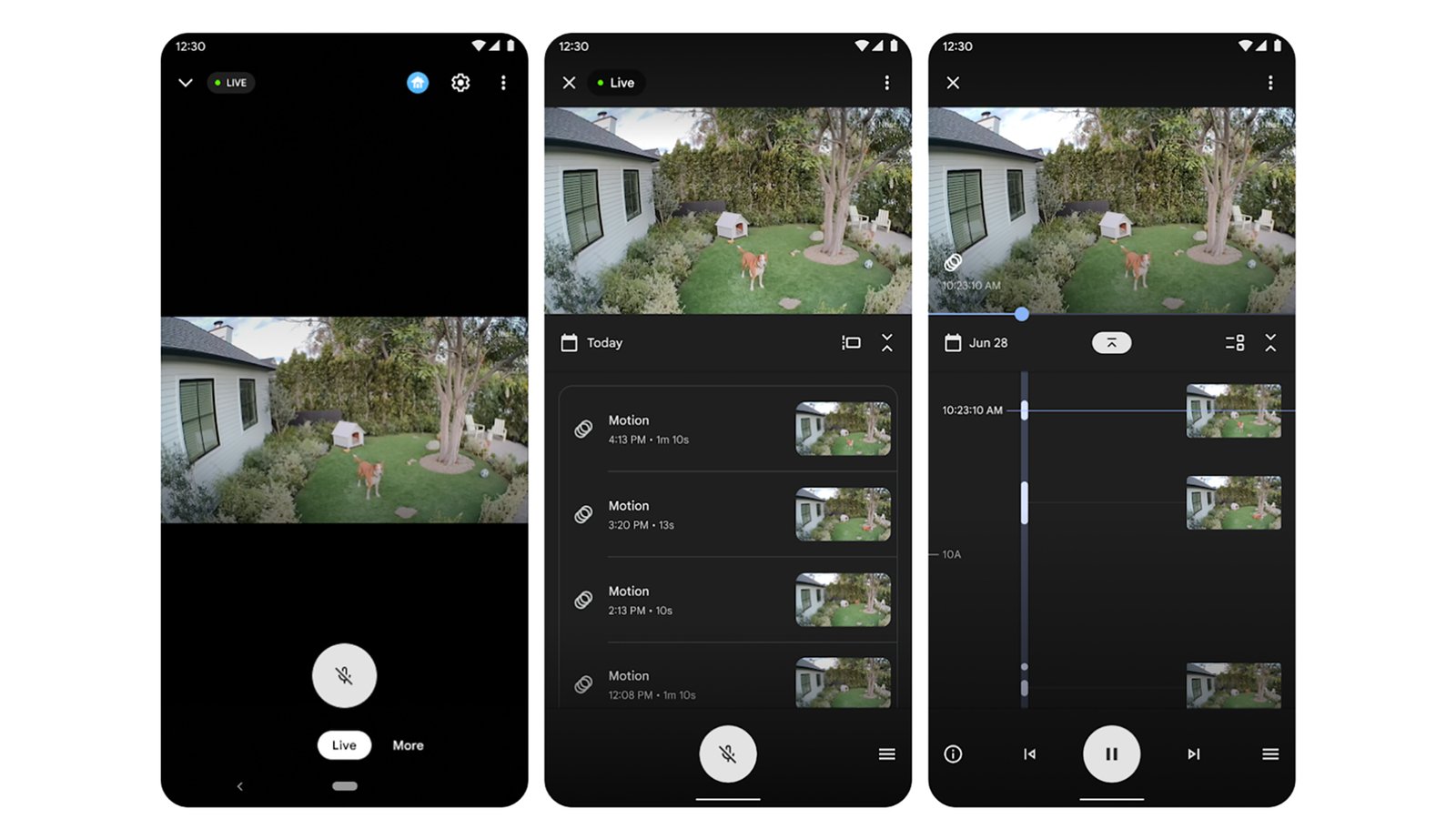
Nest Cam Indoor (1st-gen) and Nest Cam Outdoor (1st-gen) are finally coming to the Google Home app. This will also come first to people in Public Preview. Once moved over, your OG Nest Cam will work just like second-gen cams do in the Google Home app. You can see the screenshots above for a look at what a first-gen Nest Cam’s feed will look like after the update.
As part of this transition, first-gen Nest Cams will also have access to custom clips.
Elsewhere, Google is launching a new way to check on your garage door. If your garage door is visible in a Nest Cam’s feed, you will now be able to get a notification if you accidentally left the garage open. This is thanks to new AI training, so you don’t need any new sensors or equipment. This is rolling out this week to Public Preview in the US and Canada for folks who have a Nest Aware subscription and a wired Nest camera.
Source: www.androidauthority.com
ChatGPT Turns One: Most Notable Moments After OpenAI Released Its Free AI Chatbot
ChatGPT — the popular chatbot from OpenAI — was launched by the company in preview form a year ago and has grown in complexity and capabilities since its initial release. The company has since launched a premium subscription service that allows paying users to access a more powerful version of the chatbot along with early access to upcoming features and reduced downtime. OpenAI’s technology is also used to power Microsoft’s Bing Chat, and the company’s own chatbot has been updated with support for plugins, while the company also unveiled a much more powerful version earlier this month.
From its arrival in November 2022 in the form of a free AI chatbot to the release of the powerful new GPT-4 Turbo for paying subscribers earlier this month, there’s how ChatGPT has evolved over the course of a year, gaining new features and functionality along the way.
Contents
OpenAI launches ChatGPT powered by GPT 3.5
While OpenAI began working on its generative AI technology that powers ChatGPT in 2016, the company only introduced the tool as part of a free research preview on November 30, 2022. At the time, ChatGPT was powered by OpenAI’s Generative Pre-trained Transformer 3.5 (GPT-3.5) models, but the tool was only trained on information up to September 2021.
ChatGPT Plus and GPT-powered Bing announced
Earlier this year, OpenAI rolled out an optional subscription plan for “ChatGPT Plus” that would provide premium access to the company’s chatbot. While users could — and still can — access the chatbot for free, paying customers would get access to new features, early access to unreleased features, and less downtime. Days after OpenAI’s announcement, Microsoft unveiled a new version of Bing that was powered by OpenAI’s GPT models. Bing Chat was rolled out to users on smartphones and via the Microsoft Edge web browser.
OpenAI launches ChatGPT API, unveils plugins and GPT-4 models
ChatGPT users were previously limited to accessing the chatbot via OpenAI’s service, but the arrival of the ChatGPT API allowed app developers and web designers to quickly integrate support for ChatGPT — leading to a surge in apps and web services powered by AI chatbots. In March, the service was banned in Italy over collection of personal data and a lack of age verification tools — the ban was lifted a month later.
The firm quickly followed up with the release of GPT-4, a powerful update over the preceding model, that was integrated in ChatGPT and Bing Chat — you can use GPT-4 on the latter for free, and it has picked up several new improvements and enhancements over the past few months. It also added support for plugins on ChatGPT, which allow the chatbot to browse the web and understand code.
ChatGPT comes to iOS and Android, gets powerful new features
OpenAI’s chatbot made its way to a smartphone via a dedicated iOS app in May and the company allowed users to access a version of the app powered by GPT-3.5 for free, while paying subscribers could access GPT-4 for better answers and more detailed information. The app was released for Android users in July.
ChatGPT gained new capabilities in September when OpenAI revealed that paying subscribers would be able to upload images, or use the ChatGPT mobile app to ask queries with their voice — this feature was later rolled out to all users. The chatbot was also upgraded with support for the image generation model DALL-E 3, for ChatGPT Plus and ChatGPT Enterprise customers.
OpenAI unveils GPT4 Turbo with advanced capabilities
Earlier this month, the AI firm announced GPT-4 Turbo, an enhanced version of OpenAI’s GPT-4 model. It was also the first time since GPT-3.5 was released last year that the company increased the amount of information the chatbot was trained on — while GPT 4 and older models can access data up to September 2021, GPT-4 Turbo can view information up to April 2023. Its context window is now 128k, which means that it can now process up to 300 pages of a book when it is responding to a user’s query.
Source: www.gadgets360.com
SONOFF SNZB-04 ZigBee Wireless Door Window Sensor, Burglar Alarm for Home Security, Compatible with Alexa Google Home, Zigbee Bridge Hub Required
✔ SONOFF wireless door/window sensor can be put on your door or window to tell you with an alert notification if your door or window is opened or closed, adding an extra layer of security to your home. Both the opening and closing status of the door/window are synced on your mobile phone, no longer to think back whether the door/down is off or not.
✔ SONOFF ZigBee Bridge is required. The sensor provides you the possibility to create a scene linkage of ZigBee and Wi-Fi devices. This sensor is able to help you create a smart home. Works with SONOFF ZigBee Bridge in harmony, you can set a scene to get your hallway lighted immediately when the door is opened.
✔ Simple installation for easier setup, 3M adhesive (included) installation significantly saves your time. Its application can also extend to wide areas like drawers, garage doors, blinds, etc. Just stick it anywhere two things connect and it is always safe even if you don’t keep watch on it.
✔ Share the sensor with your family to give them an ability to quickly control and monitor your home together. 3-month history records check.
✔ The camera function can be enabled on the sensor page in the eWeLink APP, which also allows you to view clearly who enters your home; even you can frighten the stranger and ask him to leave your home immediately with the two-way audio function.
Price: ₹7,064.00
(as of Nov 29, 2023 08:22:09 UTC – Details)
BMW, Nissan to Hyundai, There Has Never Been a Better Time to Buy an Electric Car
The battery-powered BMW iX is a technological marvel. The electric car travels up to 321 miles on a charge, its glass sunroof goes opaque at the touch of a button and you can turn up the stereo by twirling a finger near the dashboard. At the moment, one of these magical machines is on offer in Los Angeles for $80,195, a 17% discount on the sticker price. If that’s a bit rich, there’s an Ariya, Nissan’s all-new EV, listed for $36,690 in Kansas City — a discount of 18%. More affordable still is the $29,990 Hyundai Kona Electric available in Atlanta. That’s a 31% discount, making it almost as cheap as the gas-burning version.
To borrow a tired advertising mantra, there’s never been a better time to buy an electric vehicle, at least in the US. The American market now has more than 50 unique models to choose from, over double the options two years ago. As production volumes for battery-powered cars catch up with demand, there’s also a glut of supply. EV inventories in the US are up fivefold over the past 12 months, according to digital listing platform CarGurus.
“For consumers now, it’s great,” says Kevin Roberts, director of industry insights at CarGurus. “EVs are becoming much more affordable than they were a year ago … and we’ve covered a lot of that early-adopter demand.”
Would-be buyers should act fast, though (to borrow another advertising mantra). The excess inventory won’t last long.
Amid rising interest rates and steady inflation, pricing has been a major hurdle for EV adoption in the US. In June, almost two-thirds of US car shoppers surveyed by JD Power said they were “overall likely” to buy an electric car, but many couldn’t find one in their price range. As recently as October, the average listing price for an EV on CarGurus was 28% higher than that of a gas-burning vehicle.
Adoption is also affected by allocation formulas, which determine where new cars are shipped. EVs coming out of US factories are still disproportionately directed to dealerships in states like California that have regulations restricting gas-car sales by certain dates.
“You’re going to find large swaths of the country where you might not find a dealership with one EV on the lot, let alone a number of them,” says Roberts at CarGurus.
But the EV premium is already starting to slip, a trend Tesla Inc. set off by steadily slashing prices on its two most popular models this year. Ford followed suit, wacking up to $10,000 off the sticker price of the F-150 Lightning pickup truck. On CarGurus, average prices are down over the past 12 months for Toyota’s bZ4X (-10.3%), the Kia Niro EV (-8.6%) and the Chevrolet Bolt EUV (-6.4%), among others.
Mahi Manchala, an IT director who commutes from New Jersey to Manhattan, just swapped her gas-powered Infiniti for a top-of-the-line Mercedes EQS priced at $130,000, 6% off the window sticker. The dealer even paid for a home charger, which cost almost $2,000 with installation.
“It’s the ultimate in luxury,” Manchala says. “And for what I got, it was the best deal.”
This intoxicating moment for consumers is simultaneously a bit of a hangover for carmakers, who have been grumbling about a slowdown in EV demand and stressing the Tesla-led price wars. “With price discounts of some of the other guys [at] more than 30% … I would say this is a pretty brutal space,” Mercedes Chief Financial Officer Harald Wilhelm said on a recent earnings call.
Indeed, the EV glut is spooking many auto executives into pumping the brakes on production. Ford has delayed or put on hold $12 billion in EV spending, while slowing production of the Mustang Mach-E, its most popular electric model. GM delayed some models and abandoned a goal of building 400,000 EVs by mid-2024.
But even with those growing pains, it’s hard to overstate the momentum of the electric vehicle market. US EV sales are are up almost 2.5 times over the past 12 months. In the third quarter, EVs as a share of new car sales topped 10% in 11 US states, according to Atlas Public Policy, and they hit 7% in Texas — the country’s second largest car market after California.
“The stories being written that it’s falling apart are just dead wrong,” says Elaine Buckberg, formerly an economist at General Motors and currently a senior fellow at Harvard University.
Part of the nuance is that the spread between EV supply and demand isn’t uniform — it fluctuates depending on the model. Vehicles hitting a sweet spot between price, range, features and design are selling quickly. The Bolt, for example, which has a relatively high range and a relatively low price, is still in short supply. Ditto the Cadillac Lyric, a swanky SUV that’s meant to compete with German luxury brands but starts under $60,000.
“I wouldn’t assume buyers have lost interest in electric vehicles,” says Ingrid Malmgren, policy director at nonprofit Plug In America. “I don’t think that would accurately represent the situation.”
At AutoNation Inc., which runs about 250 dealerships in the US, EVs have lately been sitting on the lot for 60 days on average, twice as long as gas vehicles. But the weak demand manifests “in pockets,” says Derek Fiebig, vice president of investor relations.
“The higher priced vehicles, it’s a little more difficult for them,” Fiebig said at a conference on Oct. 31. “The lower priced vehicles have qualified for the federal funds, which helps, and so those are moving pretty quickly.” (Some American-made trucks and SUVs under $80,000, and some cars under $55,000, are eligible for a $7,500 Inflation Reduction Act rebate.)
In other words, the growing EV market is developing leaders and laggards. “We’re going to start to see customers get a little more picky and I think pricing is going to be really important,” says Roberts. “It’s starting to look like the regular car market.”
Source: tech.hindustantimes.com
Acer QLED TV models vs competitors: 10 cutting-edge choices for your home
Acer’s foray into QLED technology marks a significant step in home entertainment. QLED, or Quantum-dot Light Emitting Diode, represents a leap forward in TV technology. Unlike traditional LEDs, QLED TVs use quantum dots to enhance the vibrancy and range of colors, delivering images that are not only brighter but also more nuanced. Acer QLED TVs stand out for their colour accuracy and deeper blacks, providing a cinematic experience in the comfort of your home.
But how do Acer’s models stack up against their competitors? In this market, brands like Samsung, LG, and Sony have also made their mark with their own QLED offerings. Each brand brings unique features and technologies to the table, such as AI-driven picture optimization, voice control integration, and eco-friendly energy efficiency. The competition is fierce, with each model vying to offer the best balance of quality, features, and price. In considering the best QLED TV for your home, it’s essential to compare not just the picture quality but also the smart features, design, and connectivity options. Modern QLED TVs are more than just screens; they’re smart hubs capable of integrating with your digital life. Whether it’s streaming the latest 4K content, connecting to your smart home devices, or providing a stunning display for gaming, these TVs are designed to cater to all aspects of modern entertainment.
This guide presents a deep insight into Acer QLED TVs and their competitors, examining the latest models that stand out in 2023. From sleek designs to innovative features, we explore what makes each model unique. So keep reading the guide as we unveil the top 10 cutting-edge QLED TV choices for your home, ensuring you find the perfect match for your viewing preferences and lifestyle.
Contents
1. Acer 126 cm (50 inches) V Series 4K Ultra HD Smart QLED Google TV AR50GR2851VQD (Black)
This QLED stunner transforms your living room into a cinema with razor-sharp 4K Ultra HD resolution and vibrant colours that practically leap off the screen. Powered by Google TV, it delivers endless entertainment options from your favorite streaming apps and intelligent recommendations tailored just for you. The triple HDMI 2. ports connect all your devices while Dolby Atmos surround sound immerses you in the action. The included smart remote lets you navigate effortlessly with voice or touch, and the wide 178 degree viewing angle ensures everyone sees the picture perfectly. The 30 watt speakers, MEMC technology, and super bright panel take the visuals to new heights, while the dual-band WiFi and Bluetooth connectivity make it easy to stream, share, and control. With its stylish black design, this Acer TV delivers the ultimate cinematic experience in stunning clarity right in your living room.
Specifications of Acer 126 cm (50 inches) V Series 4K Ultra HD Smart QLED Google TV AR50GR2851VQD (Black):
Screen Size: 126 cm (50 inches)
Display Type: QLED
Resolution: 4K Ultra HD (3840 x 2160 pixels)
Operating System: Google TV
Colour: Black
| Pros | Cons |
| 1. 4K Ultra HD Resolution | 1. Limited screen size for larger rooms |
| 2. QLED Display for Vibrant Colors | 2. May lack advanced audio features |
| 3. Google TV for Smart Functionality | 3. Limited app ecosystem |
2. Acer 109 cm (43 inches) V Series 4K Ultra HD Smart QLED Google TV AR43GR2851VQD (Black)
This 43-inch QLED smart TV packs a visual punch with 4K Ultra HD resolution and a wide color gamut that brings every scene to vivid life. Its Quantum Dot technology, Dolby Vision, and 178-degree wide viewing angle mean you’ll see incredible clarity and contrast from any seat in the room. With Google TV, you’ll get personalized recommendations and access to thousands of apps right out of the box. The built-in Chromecast, dual-band WiFi, and Bluetooth connectivity allow you to stream, share, and control content from your smartphone or tablet. With 30 watts of audio power and Dolby Atmos, the high-fidelity speakers provide immersive sound that transports you into the action. With 3 HDMI 2. ports, you can hook up all your entertainment devices, from gaming consoles to Blu-ray players. Plus, the built-in USB ports and 2-year warranty ensure peace of mind. So whether you’re binge-watching your favourite shows or gaming on the big screen, this Acer TV brings spectacular 4K entertainment to your living room.
Specifications of Acer 109 cm (43 inches) V Series 4K Ultra HD Smart QLED Google TV AR43GR2851VQD (Black):
Screen Size: 109 cm (43 inches)
Display Type: QLED
Resolution: 4K Ultra HD (3840 x 2160 pixels)
Operating System: Google TV
Colour: Black
| Pros | Cons |
| 1. 4K Ultra HD Resolution | 1. Smaller screen size for some preferences |
| 2. QLED Display for Rich Colors | 2. Limited audio enhancement options |
| 3. Google TV for Smart Features | 3. Limited app selection |
3. Acer 139 cm (55 inches) V Series 4K Ultra HD Smart QLED Google TV AR55GR2851VQD (Black)
This Acer V Series QLED TV is made for movie maniacs and gamers alike. With 4K Ultra HD resolution and QLED technology, colours practically leap off the screen. The 178 degree wide viewing angle ensures every seat in the house enjoys stunning picture clarity. The 30-watt speakers with Dolby Atmos deliver room-filling surround sound to heighten the cinematic experience. The triple HDMI 2. ports and USB ports make connecting gaming consoles, streaming devices, and hard drives a breeze. Running on a quad-core processor, the Google TV operating system provides content recommendations, a personalized watchlist, and hands-free control with the Google Assistant for an effortless smart TV experience. The MEMC technology, high refresh rate, and dynamic calibration optimize every frame of fast-paced action for a smooth, blur-free viewing experience. So grab your game controller and streaming remote, this Acer TV is ready to immerse you in an epic world of entertainment.
Specifications of Acer 139 cm (55 inches) V Series 4K Ultra HD Smart QLED Google TV AR55GR2851VQD (Black):
Screen Size: 139 cm (55 inches)
Display Type: QLED
Resolution: 4K Ultra HD (3840 x 2160 pixels)
Operating System: Google TV
Colour: Black
| Pros | Cons |
| 1. Large 55-inch Screen | 1. May not fit in smaller spaces |
| 2. 4K Ultra HD Resolution | 2. Limited audio features |
| 3. QLED Display with Vibrant Colors | 3. App ecosystem may be limited |
4. Acer 164 cm (65 inches) W Series 4K Ultra HD QLED Smart Android TV AR65AR2851QD (Metallic Grey)
This Acer W Series 4K Ultra HD QLED Smart TV’s massive 164 cm display boasts 4K Ultra HD resolution and Quantum Dot technology for brilliant color and clarity that pulls you into the action. Powered by Android TV, this smart TV gives you access to thousands of apps and games from the Google Play Store, and the built-in Chromecast lets you stream content from your phone to the big screen with ease. The bezel-less metallic gray design looks stunning from any angle and blends seamlessly into your decor. With Dolby Vision HDR, this TV transforms everything you watch into a vivid viewing experience with striking highlights, more depth of colour and stunning contrast. Whether you’re binge-watching the latest shows, streaming your favourite movies or gaming with friends, this Acer TV brings big-screen thrills and endless entertainment right into your living room.
Specifications of Acer 164 cm (65 inches) W Series 4K Ultra HD QLED Smart Android TV AR65AR2851QD (Metallic Grey):
Screen Size: 164 cm (65 inches)
Display Type: QLED
Resolution: 4K Ultra HD (3840 x 2160 pixels)
Operating System: Android TV
Colour: Metallic Grey
| Pros | Cons |
| 1. Large 65-inch Screen | 1. Requires ample space for installation |
| 2. 4K Ultra HD Resolution | 2. May not have the latest Android updates |
| 3. QLED Display for Excellent Colors | 3. Limited app selection for Android TV |
5. Hisense 139 cm (55 inches) Tornado Series 4K Ultra HD Smart QLED TV 55E7K PRO (Dark Grey)
This Acer W Series 4K Ultra HD QLED Smart TV is your portal to endless entertainment. Its massive 164 cm display boasts 4K Ultra HD resolution and Quantum Dot technology for brilliant color and clarity that pulls you into the action. Powered by Android TV, this smart TV gives you access to thousands of apps and games from the Google Play Store, and the built-in Chromecast lets you stream content from your phone to the big screen with ease. The bezel-less metallic gray design looks stunning from any angle and blends seamlessly into your decor. With Dolby Vision HDR, this TV transforms everything you watch into a vivid viewing experience with striking highlights, more depth of color and stunning contrast. Whether you’re binge-watching the latest shows, streaming your favourite movies or gaming with friends, this Acer TV brings big screen thrills and endless entertainment right into your living room.
Specifications of Hisense 139 cm (55 inches) Tornado Series 4K Ultra HD Smart QLED TV 55E7K PRO (Dark Grey):
Screen Size: 139 cm (55 inches)
Display Type: QLED
Resolution: 4K Ultra HD (3840 x 2160 pixels)
Operating System: Proprietary OS
Colour: Dark Grey
| Pros | Cons |
| 1. 4K Ultra HD Resolution | 1. Limited brand recognition |
| 2. QLED Display for Color Accuracy | 2. May lack advanced audio capabilities |
| 3. Smart Features for Streaming | 3. Limited ecosystem for apps |
6. ALT 108 cm (43 inch) Premium Series 4K Ultra HD QLED Google Smart TV 43QUGA1 (Black) 2023 Model
With 4K Ultra HD resolution and a crisp 60 hertz refresh rate, you’ll be immersed in stunning picture quality from the moment you turn it on. The three HDMI ports make it easy to connect devices like set-top boxes and gaming consoles, while the two USB ports allow you to access photos, music and more from external hard drives. Android TV provides simple access to all your favourite entertainment apps like Netflix, Amazon Prime Video and more through the user-friendly interface. The Gamma Cinema and Game Optimized modes pair with the X1 processor to deliver clarity and colour depth optimized for both movies and gaming. Voice search through the remote makes finding what you want to watch a breeze. A one-year manufacturer’s warranty ensures reliability and peace of mind.
Specifications of ALT 108 cm (43 inch) Premium Series 4K Ultra HD QLED Google Smart TV 43QUGA1 (Black) 2023 Model:
Screen Size: 108 cm (43 inches)
Display Type: QLED
Resolution: 4K Ultra HD (3840 x 2160 pixels)
Operating System: Google TV
Colour: Black
| Pros | Cons |
| 1. 4K Ultra HD Resolution | 1. Smaller screen size for some preferences |
| 2. QLED Display for Vivid Colors | 2. May not have the latest software updates |
| 3. Google TV for Smart Functionality | 3. Limited audio enhancements |
7. TCL 139 cm (55 inches) 4K Ultra HD Smart QLED Google TV 55T6G (Black)
Experience cinema-like visuals in the comfort of your own home with the TCL 55T6G 4K Smart TV. Combining stunning 4K Ultra HD resolution and QLED technology, this TV delivers vivid color, deep contrast and lifelike clarity. The Google TV interface features hands-free voice control and content recommendations curated just for you. Access all your favorite streaming apps and browse over 700,000 movies and TV episodes with a simple voice command. The Dolby Vision HDR and Dolby Atmos technologies transport you into the story with heightened brightness, color and sound. With a stylish, minimalist design, this TCL QLED TV blends seamlessly into any living space while bringing the theater experience home.
Specifications of TCL 139 cm (55 inches) 4K Ultra HD Smart QLED Google TV 55T6G (Black):
Screen Size: 139 cm (55 inches)
Display Type: QLED
Resolution: 4K Ultra HD (3840 x 2160 pixels)
Operating System: Google TV
Colour: Black
| Pros | Cons |
| 1. 4K Ultra HD Resolution | 1. Limited brand recognition |
| 2. QLED Display with Rich Colors | 2. Audio quality may not be top-tier |
| 3. Google TV for Smart Features | 3. App selection may be limited |
8. iFFALCON 126 cm (50 inches) 4K Ultra HD Smart QLED Google TV iFF50Q73 (Black)
This 50-inch iFFALCON QLED smart TV’s stunning 4K Ultra HD resolution and QLED display bring out over a billion shades of color so images virtually leap off the screen. The 60 Hertz refresh rate means less motion blur for smooth sports and action scenes, while Dolby Vision and HDR10+ optimize brightness and contrast frame by frame. Premium audio via 30 watts of Dolby Atmos and DTS Virtual:X integrated speakers immerses you in action, and the 64-bit processor makes everything from streaming apps to gaming run like a dream. Built-in Google TV provides access to all your favourite streaming content, and three HDMI ports, a USB port, and Bluetooth connectivity ensure all your devices are connected. With integrated Alexa and voice control, you can easily search for movies, adjust the volume, and switch inputs using just your voice. All in all, this smart TV delivers an exceptional entertainment experience at an affordable price.
Specifications of iFFALCON 126 cm (50 inches) 4K Ultra HD Smart QLED Google TV iFF50Q73 (Black):
Screen Size: 126 cm (50 inches)
Display Type: QLED
Resolution: 4K Ultra HD (3840 x 2160 pixels)
Operating System: Google TV
Colour: Black
| Pros | Cons |
| 1. 4K Ultra HD Resolution | 1. Smaller screen size for some preferences |
| 2. QLED Display for Vibrant Colors | 2. Limited brand recognition |
| 3. Google TV for Smart Functionality | 3. May lack advanced audio features |
Also read: Xiaomi to launch new QLED TV in India on 16 December: Details here
9. Samsung 138 cm (55 inches) 4K Ultra HD Smart QLED TV QA55QE1CAKLXL (Titan Gray)
This Samsung QLED TV brings the next level of picture quality to your living room. With 4K Ultra HD resolution and Quantum Dot technology, it delivers over a billion shades of brilliant color and ultra-sharp clarity that will make you feel like you’re right in the scene. Samsung’s QLED Smart TV offers endless entertainment options with access to all your favourite apps, live TV, and an internet browser. Stream movies and TV shows in stunning 4K from Netflix, Hulu, and more. The Quantum Processor 4K upscales everything you watch to near 4K picture quality for an immersive viewing experience. Plus, with Alexa and Google Assistant built-in, you can use your voice to control playback, adjust the volume, launch apps, get answers, and control compatible smart home devices – all hands-free. This QLED TV’s slim, stylish design complements any modern living space, while Q-Symphony and Object Tracking Sound provide a rich, surround sound experience that immerses you in the action like never before.
Specifications of Samsung 138 cm (55 inches) 4K Ultra HD Smart QLED TV QA55QE1CAKLXL (Titan Gray):
Screen Size: 138 cm (55 inches)
Display Type: QLED
Resolution: 4K Ultra HD (3840 x 2160 pixels)
Operating System: Proprietary OS
Colour: Titan Gray
| Pros | Cons |
| 1. 4K Ultra HD Resolution | 1. Proprietary OS may have limitations |
| 2. QLED Display for Excellent Colors | 2. Higher price point for brand |
| 3. Smart Features for Streaming | 3. May lack some app diversity |
10. VW 109 cm (43 inches) QL Frameless Series 4K Ultra HD Smart QLED TV VW43QUW1 (Black)
This no-nonsense smart TV delivers everything you need in a straightforward, easy-to-use package. The VW 109 cm (43 inches) frameless QLED display offers 4K Ultra HD resolution for sharp, crisp images that’ll make your favourite shows and movies pop off the screen. The user interface is straightforward and hassle-free, letting you find what you want to watch quickly and easily. Connect all your devices – streaming sticks, gaming consoles, Blu-ray players – to the built-in WiFi and HDMI ports, and enjoy all your content in stunning 4K. Sometimes less is more, and if what you want is a large screen with great picture quality at a reasonable price, this TV delivers the goods.
Specifications of VW 109 cm (43 inches) QL Frameless Series 4K Ultra HD Smart QLED TV VW43QUW1 (Black):
Screen Size: 109 cm (43 inches)
Display Type: QLED
Resolution: 4K Ultra HD (3840 x 2160 pixels)
Operating System: Proprietary OS
Colour: Black
| Pros | Cons |
| 1. 4K Ultra HD Resolution | 1. Smaller screen size for some preferences |
| 2. QLED Display with Vibrant Colors | 2. Limited brand recognition |
| 3. Smart Features for Streaming | 3. May have limited audio enhancements |
Top 3 features for you
| Product | Feature 1 | Feature 2 | Feature 3 |
| Acer 126 cm (50 inches) V Series 4K Ultra HD Smart QLED Google TV AR50GR2851VQD (Black) | 4K Ultra HD Resolution | QLED Display | Google TV |
| Acer 109 cm (43 inches) V Series 4K Ultra HD Smart QLED Google TV AR43GR2851VQD (Black) | 4K Ultra HD Resolution | QLED Display | Google TV |
| Acer 139 cm (55 inches) V Series 4K Ultra HD Smart QLED Google TV AR55GR2851VQD (Black) | 4K Ultra HD Resolution | QLED Display | Google TV |
| Acer 164 cm (65 inches) W Series 4K Ultra HD QLED Smart Android TV AR65AR2851QD (Metallic Grey) | 4K Ultra HD Resolution | QLED Display | Android TV |
| Hisense 139 cm (55 inches) Tornado Series 4K Ultra HD Smart QLED TV 55E7K PRO (Dark Grey) | 4K Ultra HD Resolution | QLED Display | Smart Features for Streaming |
| ALT 108 cm (43 inch) Premium Series 4K Ultra HD QLED Google Smart TV 43QUGA1 (Black) 2023 Model | 4K Ultra HD Resolution | QLED Display | Google TV |
| TCL 139 cm (55 inches) 4K Ultra HD Smart QLED Google TV 55T6G (Black) | 4K Ultra HD Resolution | QLED Display | Google TV |
| iFFALCON 126 cm (50 inches) 4K Ultra HD Smart QLED Google TV iFF50Q73 (Black) | 4K Ultra HD Resolution | QLED Display | Google TV |
| Samsung 138 cm (55 inches) 4K Ultra HD Smart QLED TV QA55QE1CAKLXL (Titan Gray) | 4K Ultra HD Resolution | QLED Display | Smart Features for Streaming |
| VW 109 cm (43 inches) QL Frameless Series 4K Ultra HD Smart QLED TV VW43QUW1 (Black) | 4K Ultra HD Resolution | QLED Display |
Best value for money
Acer 126 cm (50 inches) V Series 4K Ultra HD Smart QLED Google TV AR50GR2851VQD (Black) provides a truly immersive entertainment experience. The massive 50 inch QLED screen delivers stunning 4K resolution and ultra-wide viewing angles, ensuring excellent picture clarity from anywhere in the room. The built-in Google TV platform gives you simple access to thousands of apps and personalized content recommendations. Voice control with the included remote allows you to easily search, launch apps and control volume hands-free. Plus, multiple HDMI ports connect a variety of devices while dual-band wifi and Bluetooth keep you connected. Overall, this Acer TV delivers big-screen entertainment with brilliant colors, sharp resolution and handy smart features to enhance your viewing.
Best overall product
Hisense 139 cm (55 inches) Tornado Series 4K Ultra HD Smart QLED TV 55E7K PRO (Dark Grey) is perfect for movie marathons and immersive gaming. The bezel-less 4K screen with ultra-high 240 Hertz refresh rate delivers brilliant color and sharp motion handling. The quad-core processor and dual-band wifi enable smooth streaming of your favorite shows from apps like Netflix and YouTube. The 49 watt speaker system with subwoofer produces room-filling sound, while Dolby Atmos and DTS Virtual X provide surround effects to transport you into the action. The HDR formats like Dolby Vision IQ and HDR10+ optimize brightness scene-by-scene for incredible contrast and detail. Gamers will appreciate the FreeSync Premium and ALLM features which reduce input lag and screen tearing. The light sensor automatically adjusts the picture settings based on ambient light for the best viewing experience.
How to find the best Acer QLED TV?
Finding the best ACER QLED TV involves considering various factors to ensure it meets your specific needs and preferences. Here’s a step-by-step guide to help you find the perfect ACER QLED TV. Check out the factors below.
Define Your Budget:
Determine how much you’re willing to spend on your ACER QLED TV. Having a clear budget will narrow down your options and prevent you from overspending.
Consider Screen Size:
Decide on the ideal screen size for your viewing space. Consider factors like room dimensions and viewing distance. ACER QLED TVs come in a range of sizes, so choose one that provides an immersive viewing experience.
Choose the Right Resolution:
ACER QLED TVs typically offer 4K and 8K resolutions. 4K provides excellent picture quality, while 8K offers even sharper visuals. Select the resolution that matches your content consumption and budget.
Evaluate Picture Quality:
Look for ACER QLED TVs with features like Quantum Dot technology, high brightness levels, HDR support (HDR10 and Dolby Vision), and local dimming for improved picture quality. Read reviews and consider the TV’s color accuracy and contrast ratio.
Check for Smart Features:
Ensure the TV has the smart features you desire. ACER QLED TVs often run on popular platforms like Android TV or have proprietary smart interfaces. Check for app compatibility, voice control, and ease of navigation.
Assess Audio Quality:
Consider the TV’s audio capabilities. Look for features like Dolby Atmos and DTS:X support for immersive sound. Some users may opt for a separate soundbar or home theater system for enhanced audio.
Connectivity Options:
Check the availability and types of ports such as HDMI, USB, and audio outputs. Make sure there are enough ports for your devices, such as gaming consoles, streaming devices, and sound systems.
Research User Reviews:
Read user reviews and expert opinions on different ACER QLED TV models. Pay attention to feedback regarding reliability, durability, and overall performance.
Visit Retail Stores:
If possible, visit electronics stores to see the TVs in person. This allows you to evaluate the build quality, screen quality, and user interface firsthand.
Compare Prices:
Compare prices from various retailers and online marketplaces to find the best deals and promotions. Keep an eye out for discounts and bundles.
Check Warranty and Customer Support:
Ensure that the TV comes with a manufacturer’s warranty, and familiarize yourself with the warranty terms. Additionally, check if customer support is readily available in case you encounter any issues.
Consider Energy Efficiency:
If energy efficiency is a concern, look for ACER QLED TVs with energy-saving features like automatic power-off and eco modes.
Read User Manuals:
Before making a final decision, review the user manuals or product documentation to ensure the TV’s features align with your requirements.
Seek Recommendations:
Don’t hesitate to ask for recommendations from friends, family, or online forums to gather insights from others who have purchased ACER QLED TVs.
FAQs
Question : What are the smart TV capabilities of ACER QLED TVs, and which operating system do they use?
Ans : ACER QLED TVs often run on popular smart TV platforms like Android TV or their proprietary operating systems. They allow you to access streaming apps, browse the internet, and control your TV with voice commands.
Question : Are there any unique software features or apps specific to ACER QLED TVs?
Ans : Some ACER QLED TVs may offer unique software features like picture optimization, gaming modes, and screen mirroring. The availability of specific apps can vary based on the TV’s operating system.
Question : How do ACER QLED TVs handle HDR (High Dynamic Range) content?
Ans : ACER QLED TVs support HDR content, providing improved contrast and a wider range of colors for a more lifelike viewing experience. They typically support popular HDR formats like HDR10 and Dolby Vision.
Question : What audio technologies and sound quality can you expect from QLED TVs?
Ans : QLED TVs often feature advanced audio technologies, including Dolby Atmos and DTS:X support. These technologies deliver immersive and high-quality sound for your entertainment.
Question : Is there a warranty and customer support for QLED TVs?
Ans : QLED TVs (from almost every brand) usually come with a manufacturer’s warranty, and customer support is available for troubleshooting and inquiries.
Question : What connectivity options are available on ACER QLED TVs, such as HDMI, USB, and wireless?
Ans : ACER QLED TVs typically have multiple HDMI and USB ports for connecting external devices. They also offer wireless connectivity options like Wi-Fi and Bluetooth for convenience.
Source: www.livemint.com