
These movies, from other industries, pan-Indian blockbusters in their very own proper, have used mythology and folklore to construct formidable cinematic universes. Currently, Indian cinema is witnessing a transformative shift as filmmakers more and more flip to the rustic’s wealthy tapestry of mythology and folklore to construct cinematic universes.
From the epic grandeur of ‘Baahubali’ to the animated spirituality of Mahavatar Cinematic Universe, from Prasanth Varma’s superhero reimagining of Indian epics to Maddock Films’ folklore-based horror universe and Dominic Arun’s myth drama combined with Kerala folklore – those interconnected storytelling ecosystems are redefining Indian cinema house – one universe at a time.
The newest to sign up for this rising roster is Rishab Shetty’s ‘Kantara’. While the 2022 movie presented audiences to the Bhoota Kola pageant of coastal Karnataka, the newest providing, ‘Kantara: Chapter 1’ (a prequel to the movie), delves deeper into Guligas – parent deities and people spirits basically worshipped within the Tulu Nadu area. With such increasing universes at the horizon, allow us to discover how folklore and mythology, when woven into interconnected storytelling worlds, create this potent system for luck.
THE RISE OF CINEMATIC UNIVERSES IN INDIAN CINEMA
The thought of a cinematic universe is the place a couple of movies, characters, and storylines exist inside a shared international. This thought has lengthy been ruled through Western franchises. From Star Wars to Marvel and DC, Indians were obsessive about such cinematic universes for a number of a long time.
Over the previous couple of years, filmmakers again house appear to have taken a cue, constructing Indianised cinematic universes. While YRF’s Spy Universe and Lokesh Cinematic Universe discover the worlds in fresh setups, many filmmakers are actually tapping into mythology and folklore to construct their very own universes.
Indian filmmakers have found out that our cultural heritage gives similarly compelling, if now not richer, supply subject material for world-building.
Maddock Films has created the Maddock Horror Comedy Universe, consisting of movies like ‘Stree’ (2018), ‘Bhediya’ (2022), ‘Munjya’ (2024), and ‘Stree 2’ (2024), with upcoming releases together with Thamma (2025). Meanwhile, director Prasanth Varma has introduced the Prasanth Varma Cinematic Universe (PVCU), drawing inspiration from the Itihasas of Akhand Bharat, with ‘Hanu-Man’ (2024) as its first instalment.
Hombale Films has ventured into animation with the Mahavatar Cinematic Universe, whilst Arka Mediaworks’ ‘Baahubali’ franchise pioneered this development over a decade in the past.
THE BAAHUBALI BLUEPRINT: PIONEERING WORLD BUILDING IN INDIAN CINEMA
Long ahead of the time period ‘cinematic universe’ used to be repeatedly used, there used to be SS Rajamouli’s ‘Baahbuali’ to turn the way in which. It put Telugu cinema at the world map, it opened Indian cinema’s doorways to a complete new set of target audience. Little did any person know again then that ‘Baahubali’ would get started a development in India, as some of the first movies to faucet into the cinematic universe concept.
Shobu Yarlagadda, some of the manufacturers of ‘Baahubali’ movies, in an unique interview with India Today, introduced an important insights into how Indian cinema stumbled upon after which mastered the artwork of universe advent. “In 2012, after we set to work on ‘Baahubali’, we first were given uncovered to world-building laws, characters and worlds and the idea that of a cinematic universe or a cinematic international,” recalled Yarlagadda. “Till then it used to be predominantly you’re making a movie, and it is going out and that is the reason the top of it. The West has been doing it for a few years.”
What started as a unmarried movie advanced into one thing way more formidable. “When we wrote the tale with Rajamouli, Vijayendra Prasad and the workforce, we realised that there have been 5 – 6 very robust characters and two to 3 very strongly edged worlds.”

The workforce’s collaboration with VFX animation corporate Firefly proved transformative. They presented the ideas of world-building characters and milieus that proved definitive, and a algorithm that could not be damaged for narrative comfort. “World constructing method you outline your characters and the worlds and a algorithm for that individual international. So that you do not with ease wreck it on your comfort within the tale. Without figuring out a rule, in the event you wreck, then it turns into very inconsistent,” Yarlagadda defined.
BAAHUBALI BEYOND THE REALM OF CINEMA
Yarlagadda’s publicity to global movie markets presented him to transmedia storytelling, basically transferring his standpoint. “Earlier, in my worldview, the centre used to be a movie, after which what we do is from the movie. Later, I learnt that it’s the international this is on the centre and now not the movie.”
This method allowed ‘Baahubali’ to enlarge right into a universe past the display screen – novels, comedian books depicting early life episodes of key characters, animated sequence, cell video games, and products – every providing a unique access level into the franchise.
WHY MYTHOLOGY WORKS: THE CULTURAL ADVANTAGE
The unexpected affinity against mythology and folklore is not unintended – it’s deeply rooted within the Indian collective reminiscence. A up to date luck saga is Malayalam cinema’s ‘Lokah: Chapter 1 – Chandra, which gave the trade’s first feminine superhero. Director Dominic Arun is recently running at the five-part franchise, which brings to existence characters from Kerala folklore, particularly Neeli, Odiyan, Chathan and Moothon.
Speaking to India Today completely, Dominic Arun defined how and why mythological and folklore tales are on the upward push. “It’s as a result of we grew up listening to folklore and mythology at house from our oldsters and grandparents, in colleges, temples, and and many others. These tales already stay in our collective reminiscence, so when reimagined cinematically, they really feel each recent and acquainted,” he remarked.

This familiarity offers Indian cinematic universes a singular benefit. Audiences already know the fundamental personality characteristics, ethical frameworks, and narrative arcs – filmmakers are creatively presenting them in new, visually impressive tactics. “We have wealthy supply subject material with centuries of layered tales and archetypes,” Arun famous, figuring out this as a key good thing about running with mythological subject material.
MYTHOLOGICAL AND FOLKLORE STORIES: THE DOUBLE-EDGED SWORD
Working with established mythology gifts each alternatives and demanding situations. Yarlagadda known some of the primary drawbacks in presenting such tales: “’Baahubali’ is fictionalised mythology. So, we make a decision what the foundations have been. Nobody can query us. But, you realize Hanuman or Lord Ram behaved a undeniable means. You cannot wreck the ones laws. While you have already got the ones laws, you’ll’t wreck them. But if, for Ram, they wreck the foundations, there must be correct justification or you’ll’t do it.
This constraint calls for filmmakers to paintings inside established frameworks, however it additionally supplies a canvas for upping creativity. Dominic Arun mentioned every other important problem. “There’s at all times a possibility of controversy while you try such tales. Myths are sacred to many, so reinterpretation may cause backlash. One needs to be cautious.”
Despite those demanding situations, the ingenious freedom inside fictional mythologies lets in for daring experimentation. “Baahubali’ is a fictionalised mythology of varieties,” says Yarlagadda. “But our personal mythology, there may be such a lot to discover. And I feel filmmakers are slowly finding… there is a huge doable on this, if we do it proper.”
ANIMATION ENTERS THE ARENA
The luck tale of Made-in-India movie ‘Mahavatar Narasimha’ demonstrated that animation could be a robust medium for mythological storytelling as smartly. Chaluve Gowda, co-producer at Hombale Films, mirrored at the movie’s have an effect on. He mentioned, “It used to be extremely heartening to peer audiences – old and young – embody ‘Mahavatar Narasimha’ with such interest. When we started this adventure with director Ashwin Kumar and Kleem Productions (owned through Ashwin Kumar and Shilpa Dhawan), we knew we have been making an attempt one thing daring and other.”
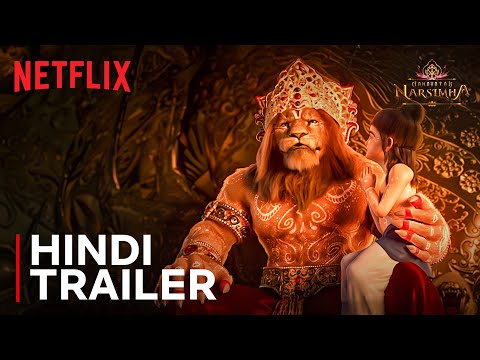
The movie and its impeccable theatrical run have helped shift perceptions about animated content material in India. “For a very long time, animated movies have been observed as area of interest or just for youngsters, however ‘Mahavatar Narasimha’ has helped shift that narrative,” mentioned Gowda, including, “The movie’s luck displays that animation, when handled with the similar cinematic ambition and emotional intensity as live-action, can wreck barriers.”
More importantly, Gowda famous that “there used to be a deep starvation for original, spiritually resonant storytelling.”
WHEN SUPERHEROES MEET ITIHASAS AND HORROR MEETS HUMOUR
Telugu director Prasanth Varma’s method with the Prasanth Varma Cinematic Universe (PVCU) represents every other cutting edge fashion. He is reimagining figures from Indian epics as trendy superheroes, with plans to introduce six superheroes in segment one. His movie ‘Hanu-Man’, which pulls from the Hanuman mythology, has already received the National Film Award.
While mythological universes draw from non secular epics, Maddock Films’ method is centred on Indian folklore, making a shared universe of supernatural horror-comedy movies. The studio received prominence in 2018 with’ Stree’, which popularised the horror-comedy mix in Bollywood with an excellent mixture of humour and supernatural parts.
Maddock Films has introduced an formidable slate extending thru 2028, together with ‘Stree 3’ (August 13, 2027), ‘Mahamunjya’ (December 24, 2027), and two-part movies titled ‘Pehla Mahayudh’ (August 11, 2028) and ‘Doossra Mahayudh’ (October 18, 2028).
Not simply that, the Mahavatar Cinematic Universe has six extra movies that will likely be launched between 2027 and 2037. The reputable free up calendar contains ‘Mahavatar Parshuram’ (2027), ‘Mahavatar Raghunandan’ (2029), ‘Mahavatar Dhawkadhesh’ (2031), ‘Mahavatar Gokulananda’ (2033), ‘Mahavatar Kalki Part 1’ (2035), and ‘Mahavatar Kalki Part 2’ (2037).
This Marvel-Cinematic-Universe-style making plans has laid naked the arrogance Indian studios now have in constructing long-term franchises rooted in native folklore.
THE ROAD AHEAD: RECONNECTING WITH FORGOTTEN LEGENDS
Dominic Arun known a significant benefit in making an attempt a cinematic universe steeped in mythology and folklore. “The primary asset is reconnecting audiences with forgotten legends. We have wealthy supply subject material.” India’s huge repository of regional folklore, folks heroes, and lesser-known mythological tales be offering countless subject material for cinematic exploration.
Yarlagadda known as this development as “only the start”. Explaining additional, “We’re simply finding this. Whether it’s ‘Hanu-Man, ‘Mirai’ or ‘Pushpa’ or ‘Mahavatar’ universe, there is a huge doable on this, if we do it proper.”
The luck of movies throughout other codecs point out that audiences are hungry for those culturally rooted tales introduced in recent, entertaining tactics.
As Indian cinema embraces its mythological and folkloric heritage to construct expansive cinematic universes, it is not about emulating Western fashions – it is developing one thing distinctly its personal.
Cutting-edge generation, refined world-building practices, and Indian supply subject material assist in developing a brand new paradigm. In rediscovering and reimagining our personal myths and folklore, Indian filmmakers don’t seem to be simply constructing cinematic universes – they are forging a brand spanking new cultural connection between historical tales and fresh audiences, proving that essentially the most robust tales are incessantly those that experience at all times been there, ready to be informed anew.
– Ends
Source: www.indiatoday.in