Samsung and LG are makers of one of the crucial very best TVs, and also you’ll often in finding Samsung on the most sensible of our very best mini-LED TVs checklist and LG on the most sensible of the most productive OLED TVs. Each has had a robust appearing with their flagship fashions in 2025, with each the Samsung QN90F (mini-LED) and LG G5 (OLED) incomes 5 stars of their critiques. But what concerning the mid-range fashions?
I latterly examined the Samsung QN80F and gave it 4 stars in my evaluate, principally because of its moderate sound high quality, reflective display screen and a on occasion inconsistent image. I additionally had a possibility to guage it side-by-side with LG’s maximum entry-level OLED: the LG B5. While those TVs take a seat somewhere else of their respective lineups, they’re priced very in a similar fashion, with the 55-inch QN80F promoting for $1,299 / £1,199 and the 55-inch B5 for $1,299 / £1,399.So, how does the QN80F fare in opposition to the ‘most cost-effective’ 2025 OLED available on the market, and which TV is definitely worth the cash?
Contents
Color me inspired
Samsung and LG TVs each have outstanding colour replica, with colours on Samsung mini-LED fashions typically searching vibrant and punchy, and LG OLEDs searching deeper and richer. Putting the QN80F mini-LED subsequent to the LG B5, this was once as soon as once more the case.
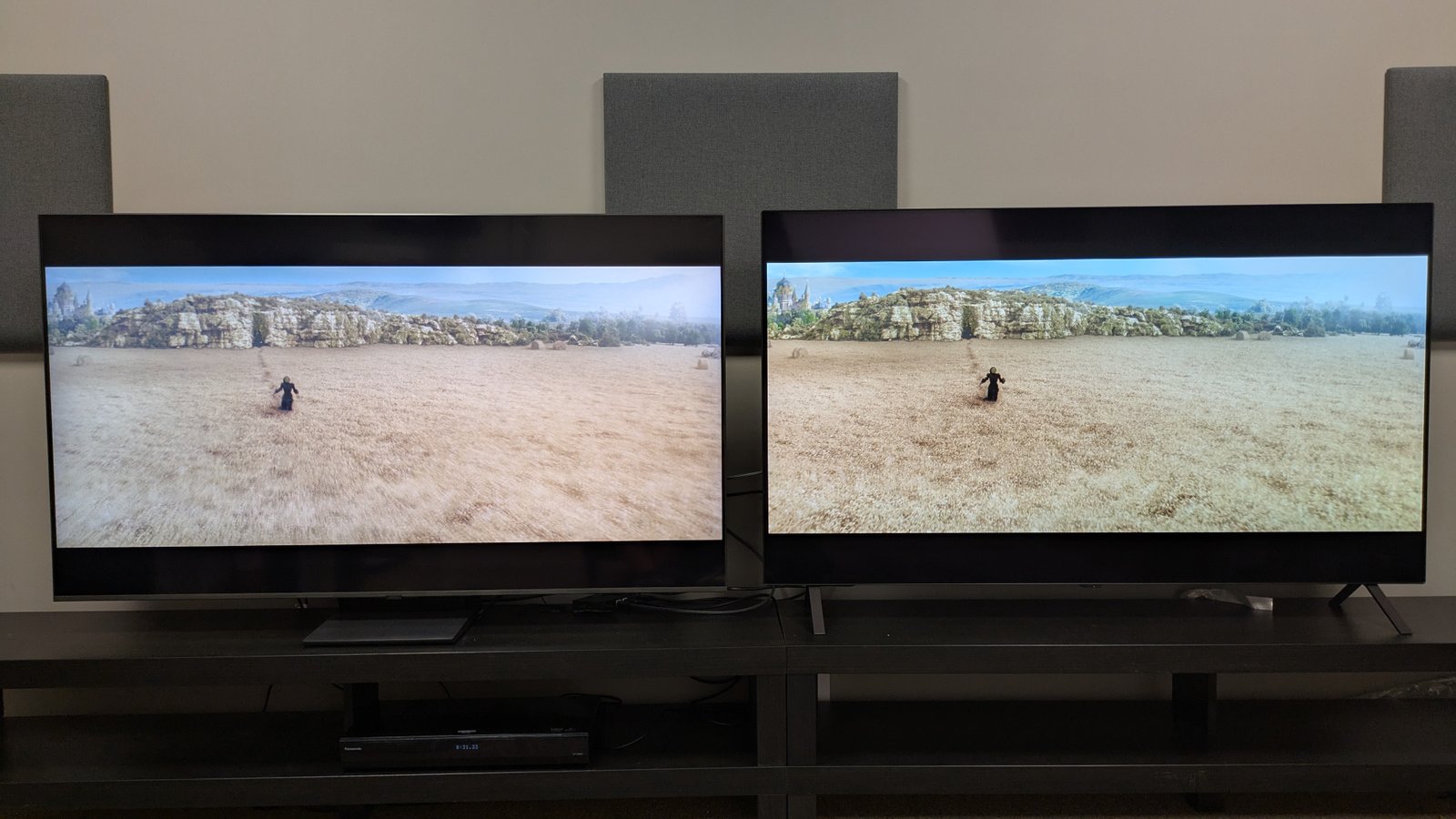
With each TVs set to their Movie image modes, I watched the Wizard & I scene from a 4K Blu-ray of Wicked, and the B5 demonstrated bolder and extra enticing colours. Pink plant life, blue main points on partitions and uniforms, and Elphaba’s inexperienced pores and skin all regarded extra brilliant at the B5, basically because of the B5’s more potent distinction. Colors nonetheless seemed vibrant and colourful at the QN80F with the similar scene, however they didn’t have the similar intensity.
Measuring UHDA-P3 colour gamut on each TVs yielded result of 93.05% at the Samsung QN80F and 99.5% at the LG B5, so it’s no actual marvel that the B5 had the brink when it got here to paint intensity and element.
Brightness and reflections
Brightness is the place the Samsung QN80F takes a large win. While mini-LED is historically a brighter show era than OLED, flagship OLEDs such because the LG G5 and Samsung S95F have made nice strides in giving OLED a brightness spice up, with each hitting over 2,000 nits. But, however, those expensive TVs use new, complex OLED panels (QD-OLED at the S95F, and ‘four-stack’ OLED at the LG G5).
The LG B5 makes use of an ordinary W-OLED panel, and in the case of brightness, it presentations. When I measured the B5’s top HDR brightness, it hit 668 nits in Movie mode, while the Samsung QN80F clocked in at 1,106 nits in the similar mode. A near-500 nit brightness distinction is simple to comprehend, and as Elphaba ran via a wheat box in the similar Wizard & I scene from Wicked, the solar seemed brighter at the QN80F due to its prime HDR brightness in top highlights, and the wheat itself had a glossier, extra attention-grabbing glance.
One factor that couldn’t be overlooked in my comparability was once how reflective the displays on each TVs have been. I expected this from the B5, principally because of its low measured fullscreen HDR brightness (a meagre 131 nits), however I anticipated the QN80F, which clocked in at 754 nits at the identical take a look at, to accomplish higher. In vibrant room lighting fixtures prerequisites, either one of those TVs be afflicted by distracting mirror-like reflections when staring at darker scenes. In dimmed prerequisites, they carry out higher, however there can nonetheless be visual reflections.
Black ranges: OLED’s very best buddy
Despite an excessively reflective display screen on each TVs and their struggles with vibrant room viewing, they show first rate distinction in maximum environments. The QN80F’s upper brightness provides a more potent perceived distinction due to the upper brightness distinction between mild and darkish tones. But glance nearer, and it’s transparent that distinction and black ranges are spaces the place OLED shines.
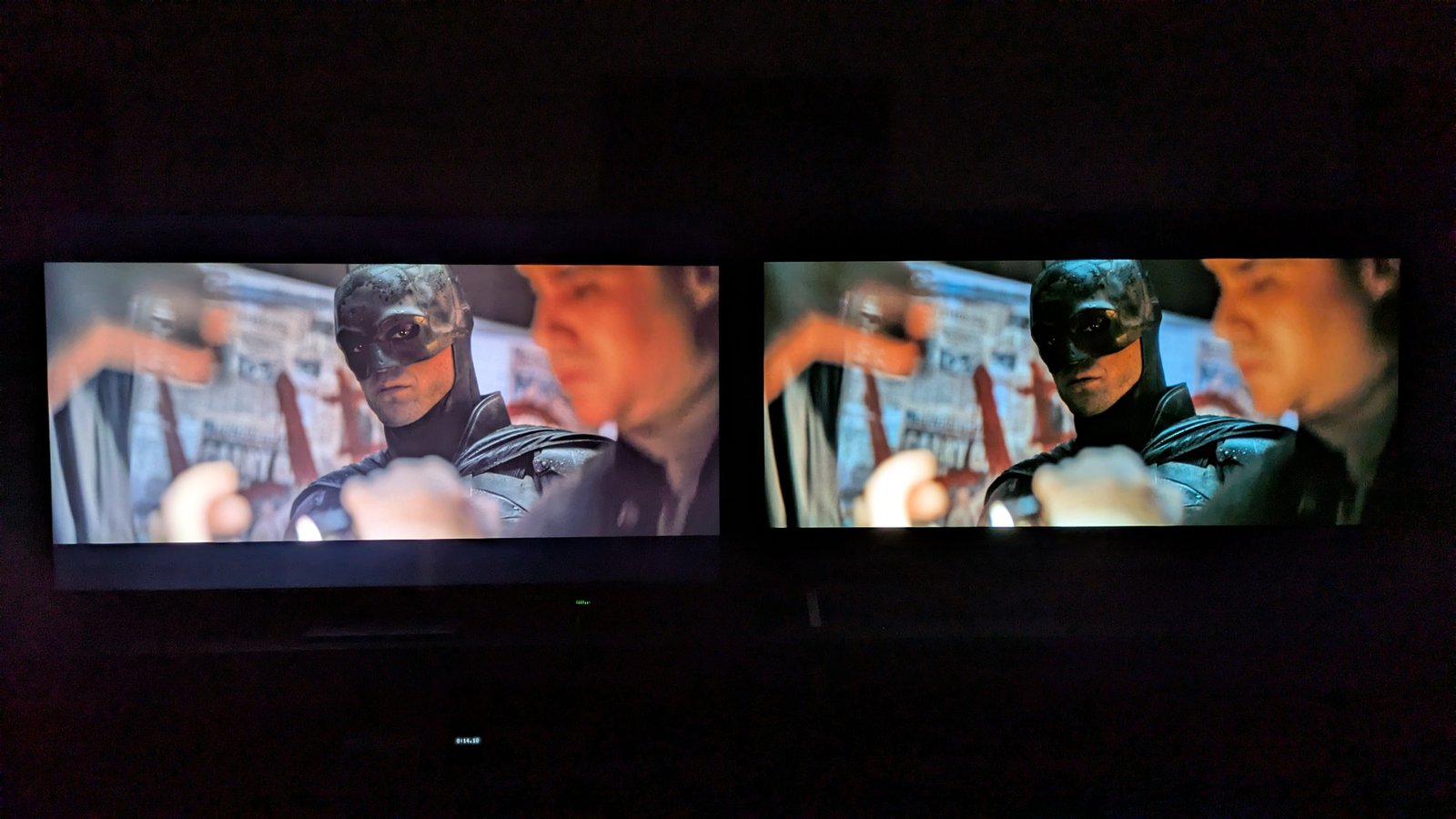
Watching the subway struggle scene and opening crime scene in The Batman, the B5 demonstrated excellent distinction, and whilst there was once a touch of black weigh down from time to time, shadow element was once additionally superb. I discovered the QN80F to have cast distinction in remoted viewing all over my checking out, however subsequent to the B5, there was once an obtrusive winner. The B5’s sharper textures and finer main points additionally gave the image a extra Three-D-like impact.
Blacks at the B5 even have that inky high quality that OLED enthusiasts love. In each The Batman and in Nosferatu, specifically the scenes the place Hutler first arrives at Orlock’s citadel, the QN80F’s black ranges have been reasonably raised, taking up a grayer tone, while the black of the woodland and the night time sky have been in reality as foreboding and ominous as supposed at the B5.
Final ideas
Both the B5 and QN80F have a robust function set, particularly for gaming, and the brand new variations of LG’s webOS and Samsung’s Tizen good TV platforms are arguably the most productive up to now. But each TVs would require one of the crucial very best soundbars to supply a cinematic enjoy at house, so my comparability all comes right down to image high quality.
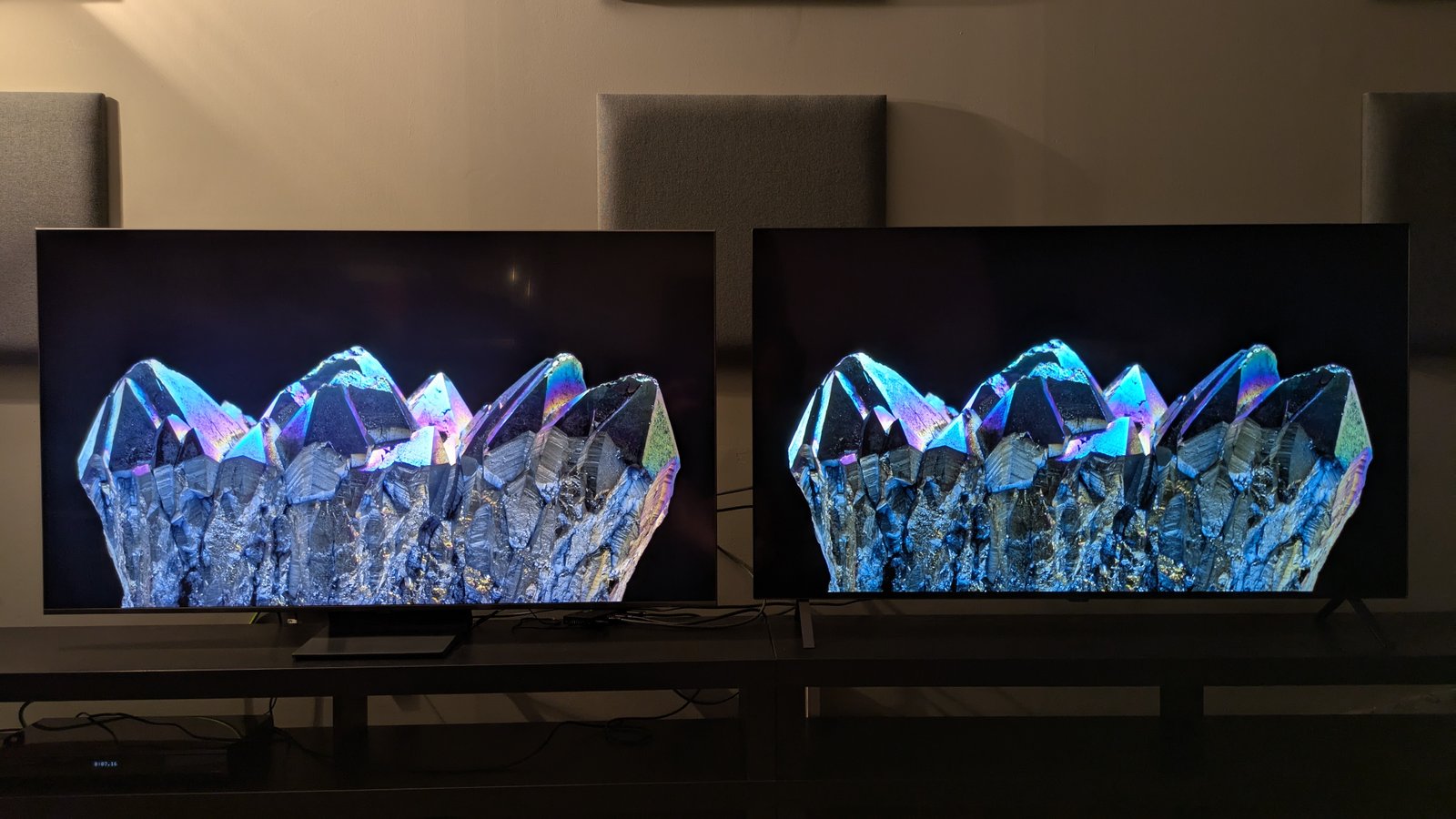
The QN80F takes a large win for brightness, however I couldn’t assist however favor the B5’s total image all over my side-by-side take a look at. Its awesome colours, deeper blacks and extra realistic-looking textures gave it the brink. If I had the cash to spend, I’d be choosing the LG B5.
You may also like
Source: www.techradar.com